


Failing MDCAT is not the end of your medical career. This guide explains MDCAT retake options, improving FSc marks, allied health sciences, study abroad opportunities, and alternative science careers. Learn how to recover from setbacks, avoid common mistakes, and build a stronger strategy for future success.
Failing a medical entry test can feel overwhelming, especially when you’ve worked hard for months. If you didn’t get the desired result in the MDCAT, you might be asking yourself: “Fail MDCAT, what to do next?” or “Is my medical career over?”
The good news is: failing MDCAT is not the end of your journey. Every year, thousands of students in Pakistan face this situation, and many of them successfully bounce back with better strategies and alternative paths. Whether you’re worried about MDCAT passing criteria in Pakistan, looking for MDCAT failure options, or wondering “Can I retake MDCAT?”, there are multiple opportunities available in 2026.
From understanding the MDCAT retake policy and exploring alternative careers after an MDCAT failure to considering options like private medical colleges or allied health sciences, this guide will walk you through everything step by step. You’ll also learn what happens if you fail MDCAT in Pakistan, what to do next, and how to make a smart comeback.
In this complete MDCAT failure guide, we’ll help you turn disappointment into a new plan, so you can move forward with clarity, confidence, and the right strategy.
Does Failing MDCAT Mean You Cannot Become a Doctor?
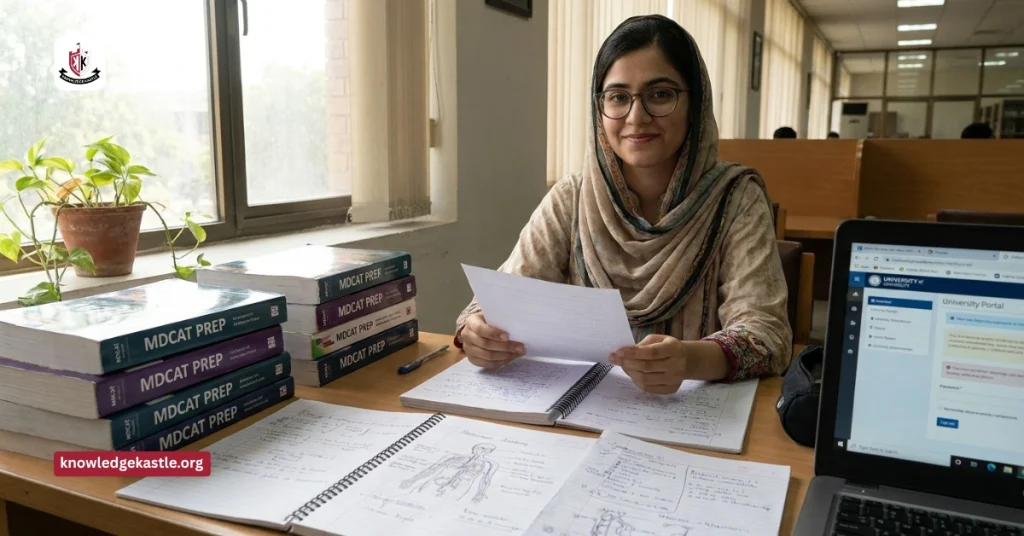
The short answer is no. Failing the MDCAT on your first attempt does not mean your dream of becoming a doctor is over.
Many students in Pakistan don’t achieve their desired score on the first try, but they still go on to secure MBBS or BDS admissions in later attempts. The system, regulated by the Pakistan Medical and Dental Council, allows multiple opportunities.
However, there are a few important realities to understand:
- You cannot get admission in MBBS or BDS for that admission cycle: If you fail to meet the required merit or passing criteria, you’ll have to wait for the next session.
- You will need to retake the exam or explore other options. This could mean preparing for the next MDCAT attempt or considering alternative fields within the medical sciences.
- MDCAT is mandatory, but not a one-time chance: The exam is required for medical admissions in Pakistan, but you can retake it in the following year with better preparation for MDCAT.
Failing MDCAT is not a failure; it’s a delay with a second chance. What matters most is what you do next: improve your strategy, stay consistent, and come back stronger.
Option 1: Retake MDCAT Next Year
This is the most common and recommended option for students who didn’t achieve their desired result in the MDCAT.
Many students make a second attempt and significantly improve their scores under the guidelines of the Pakistan Medical and Dental Council, eventually securing admission to top medical universities, including the University of Health Sciences.
What You Should Do:
- Analyze Your Weak Areas: Identify which subjects or topics caused you to lose marks (e.g., Biology concepts, Physics numericals).
- Improve Your Preparation Strategy: Don’t rely on the same study method; switch to a smarter approach with effective planning and revision.
- Focus on MCQs and Concept Building: Practice past papers to strengthen your concepts rather than rote learning.
- Join a Good Study Plan or Academy: Structured guidance can help you stay consistent and improve performance.
A second attempt is often more successful because you already understand the exam pattern, MDCAT syllabus, and your own mistakes. With the right strategy, many students turn failure into success in the next MDCAT cycle.
Option 2: Improve Your FSc Performance
This is another smart and strategic option for students who want to improve their chances after underperforming on the MDCAT.
Your FSc marks play a crucial role in merit calculation under the policies of the Pakistan Medical and Dental Council, so improving them can significantly boost your overall aggregate.
Benefits:
- Higher Aggregate Score: Better FSc marks directly improve your total merit percentage
- Better Chances Next Year: Combined with a strong MDCAT score, your admission chances increase
- Strong Academic Profile: High marks reflect consistency and academic strength
What You Should Do:
- Reappear in Subjects (if possible): Improve marks in weak subjects like Biology, Chemistry, or Physics
- Focus on Conceptual Learning: Build strong fundamentals instead of memorizing
- Plan Alongside MDCAT Preparation: Balance FSc improvement with MDCAT study for maximum benefit
- Target High-Scoring Subjects: Prioritize subjects where improvement is more achievable
Even small improvements in FSc marks can make a big difference in your final merit, helping you secure admission in your next attempt.
Option 3: Explore Allied Health Sciences
If you don’t want to retake the MDCAT, you can still build a successful career in the medical field through allied health sciences.
These programs are part of the broader healthcare system and are recognized under pathways aligned with the Pakistan Medical and Dental Council and other professional bodies in Pakistan.
Popular Fields Include:
- Doctor of Physical Therapy (DPT)
- Medical Laboratory Technology (MLT)
- Radiology Technology
- Nursing
- Pharmacy (Pharm-D)
Why Choose Allied Health Sciences?
- High-Demand Careers: These professionals are essential in hospitals and clinics
- Strong Career Growth: Opportunities exist both in Pakistan and abroad
- Less Competitive Entry: Many programs have different or lower entry requirements than the MBBS
What You Should Do:
- Research Universities & Programs: Look for accredited institutions offering your desired field
- Check Admission Criteria: Some programs may not require MDCAT or have different entry tests
- Choose According to Interest: Pick a field that matches your passion and long-term goals
- Plan Your Career Path: Explore future specialization and job opportunities
Allied health sciences are not “second options”; they are valuable and respected career paths in the healthcare system. Many students build successful and rewarding careers without pursuing MBBS or BDS.
Option 4: Study Abroad Opportunities
If you don’t want to wait another year or explore local options, studying abroad is another pathway after not clearing the MDCAT. Many students choose international medical or health science programs to continue their journey without delay.
These options can still align with long-term goals, but it’s important to check recognition policies set by the Pakistan Medical and Dental Council if you plan to practice in Pakistan later.
Options Include:
- MBBS in China
- MBBS in Russia
- Medical programs in Central Asia
Why Consider Studying Abroad?
- No Gap Year: Continue your education without waiting for the next MDCAT attempt
- Different Admission Criteria: Some universities may not require MDCAT or have alternative entry requirements
- Global Exposure: Experience international education systems and opportunities
What You Should Do:
- Check PMDC Recognition: Ensure the university is recognized if you plan to return to Pakistan
- Understand Eligibility Requirements: Each country has its own criteria (academic marks, entrance tests, etc.)
- Compare Costs: Tuition fees and living expenses vary widely
- Plan for Licensing Exams: You may need to pass exams in Pakistan after completing your degree
Studying abroad can be a good alternative, but it requires careful research and planning to ensure your degree is valid and your career path remains clear.
Option 5: Switch to Other Science Fields
If you feel that medicine is no longer the right path after attempting the MDCAT, you can explore other science-based careers that offer excellent growth and opportunities.
Not every pre-medical student has to pursue MBBS; there are many fields where you can build a successful future without following the traditional route defined by the Pakistan Medical and Dental Council.
Popular Alternatives Include:
- Biotechnology
- Microbiology
- Bioinformatics
- Environmental Sciences
Why Consider These Fields?
- Growing Demand: These areas are expanding globally, especially in research and technology
- Diverse Career Options: Opportunities in labs, research centers, industries, and international organizations
- Less Pressure than the MBBS Path: Admissions are generally less competitive compared to medical colleges
What You Should Do:
- Choose Based on Interest: Pick a field you genuinely enjoy studying
- Research Career Scope: Understand job roles, salaries, and future opportunities
- Select a Good University: Look for institutions with strong programs in your chosen field
- Plan Long-Term: Consider higher studies (MS, PhD) for better career growth
Switching fields is not a failure; it’s a strategic decision. Many students build successful careers in these science disciplines and contribute significantly to healthcare, research, and innovation.
Important Reality Check
Failing the MDCAT can feel discouraging, but it’s important to understand what it really means and what it doesn’t.
Failing MDCAT does NOT mean:
- You are not intelligent
- You cannot become successful
- Your medical dream is over
These are common thoughts, but they are not reality. The MDCAT is a competitive exam under the system of the Pakistan Medical and Dental Council, and many capable students don’t succeed on their first attempt.
It simply means:
- You need a better strategy
- You may need more time and preparation
- Or you should consider an alternative direction that suits your strengths
Your result is just one step in your journey, not your final destination. What matters most is how you respond, adapt, and move forward with a clearer plan.
Common Mistakes Students Make After Failing MDCAT

After not achieving the desired result in the MDCAT, many students make decisions that can limit their future opportunities. Understanding these mistakes can help you avoid them and plan a better comeback under the guidance of the Pakistan Medical and Dental Council system.
- Giving Up Immediately: One setback does not define your future. Many successful students clear MDCAT in their second attempt.
- Not Analyzing Mistakes: Ignoring your weak areas (like Biology concepts or Physics numericals) leads to repeating the same result.
- Ignoring Alternative Careers: Focusing only on MBBS and rejecting other fields like allied health sciences or biotechnology limits your options.
- Repeating the Same Study Method: Using the same ineffective strategy again will likely produce the same outcome. You need a smarter, improved approach.
Avoiding these mistakes can make a huge difference. Learn from your first attempt, adjust your strategy, and move forward with a clearer and more effective plan.
How to Bounce Back Stronger
Recovering from a setback in the MDCAT is all about strategy, consistency, and mindset. With the right approach, aligned with the standards of the Pakistan Medical and Dental Council, you can significantly improve your performance in your next attempt.
1. Analyze Your Weak Areas
The first and most important step is identifying where things went wrong.
Was your issue related to weak concepts in Biology or poor time management during the exam?
Focus Areas:
- Conceptual gaps in key subjects
- Poor MCQ-solving techniques
- Time pressure during the test
Understanding your mistakes helps you avoid repeating them.
2. Build a Better Study Plan
A random study routine won’t work this time; you need a smart, structured plan.
What to Include:
- Daily revision schedule
- Topic-wise MCQ practice
- Weekly mock tests
- Time management techniques
A strong plan turns hard work into effective preparation.
3. Practice Regularly
Consistent practice is the key to mastering MDCAT-style questions.
Best Practices:
- Solve past papers daily
- Attempt chapter-wise MCQs
- Practice full-length tests under timed conditions
The more you practice, the more confident and accurate you become.
4. Stay Consistent
Consistency beats intensity. Studying 4–5 hours daily with focus is far better than studying 12 hours irregularly.
Tips for Consistency:
- Follow a fixed study routine
- Avoid long breaks
- Track your daily progress
Small, consistent efforts lead to big results over time.
Bouncing back from MDCAT failure isn’t about starting over; it’s about starting smarter. With the right mindset and strategy, your next attempt can be your success story.
Conclusion
Failing MDCAT can feel like a major setback, but in reality, it is just one step in a much larger journey. Every year, many capable students don’t achieve their desired score on the first attempt, but those who stay focused, learn from their mistakes, and come back stronger often succeed in the next cycle.
The key is to respond wisely. You can retake MDCAT with a better strategy, improve your FSc marks, or explore other rewarding careers in healthcare and science. With guidance from institutions and policies set by the Pakistan Medical and Dental Council, you have multiple pathways to build a successful future.
Instead of seeing failure as the end, treat it as a valuable learning experience. Analyze what went wrong, adjust your preparation method, and stay consistent in your efforts.
In the end, success is not about never failing; it’s about how you bounce back, adapt, and keep moving forward toward your goals.
FAQs
1. Can I retake MDCAT if I fail?
Yes, you can retake MDCAT in the next admission cycle. There is no restriction on appearing again as long as you meet the eligibility criteria set by the Pakistan Medical and Dental Council. Many students improve significantly in their second attempt.
2. Does failing MDCAT mean I cannot become a doctor?
No, failing MDCAT once does not end your medical career. It simply means you need to improve your preparation or try again. Thousands of students retake MDCAT and later secure MBBS or BDS admission.
3. How many attempts are allowed for MDCAT?
There is generally no fixed limit on attempts, but you must apply and appear each year according to current policies. Always check updates from the Pakistan Medical and Dental Council for any changes.
4. Can I improve my MDCAT score in the next attempt?
Yes, many students increase their score by 10–30 marks or more by focusing on weak areas, practicing MCQs, and improving time management.
5. What are the best alternatives after failing MDCAT?
You can choose fields like Doctor of Physical Therapy (DPT), Pharmacy, Nursing, Medical Lab Technology, or Biotechnology. These are respected careers in the healthcare sector with good future scope.
6. Is MDCAT required for private medical colleges as well?
Yes, MDCAT is mandatory for both public and private medical colleges in Pakistan under the regulations of the Pakistan Medical and Dental Council.
7. Can I apply for MBBS without MDCAT in Pakistan?
No, you cannot apply for MBBS or BDS without passing MDCAT. It is a compulsory requirement for admission to all recognized medical colleges.
8. Does my FSc result matter if I fail MDCAT?
Yes, FSc marks are very important for your aggregate calculation. Improving your FSc score can increase your chances in the next attempt.
9. Is it better to take a gap year for MDCAT preparation?
If used properly, a gap year can be very beneficial. It allows you to focus completely on preparation, revise thoroughly, and improve your score significantly.
10. Who decides MDCAT rules and policies?
All rules, syllabi, and policies are regulated by the Pakistan Medical and Dental Council to ensure fairness and standardization across Pakistan.

0 Comments