

Choosing the right career path after O and A Levels requires careful planning, self-assessment, and guidance. Students can explore academic and vocational options while aligning subjects with future goals. Platforms like Knowledge Kastle provide personalized support, helping learners make informed decisions and confidently transition into higher education and professional careers.
Choosing the right career path after completing O and A Levels is one of the most important decisions in a student’s academic journey. While O Levels lay the foundation of essential knowledge and skills, A Levels prepare students for more specialized study and future professional opportunities. However, many students feel uncertain about which options align with their interests, strengths, and long-term goals.
This is where Knowledge Kastle can make a significant difference. By offering personalized guidance, expert advice, and comprehensive resources, Knowledge Kastle helps students explore a wide range of career paths, understand the linkages between subjects and careers, and make informed decisions about higher education and professional growth.
From STEM fields and business management to creative arts and social sciences, students can gain clarity on their options, plan effectively, and take confident steps toward a rewarding future.
With the right strategies and guidance, the journey from O and A Levels Program to a fulfilling career becomes structured, informed, and achievable, empowering students to align their academic choices with their aspirations.
What are the main career options and guidance available for students after completing O and A Levels?
After O Levels, students can pursue A Levels, IB, foundation programs, or vocational courses to build skills:
After O Levels:
- A Levels or IB for higher education
- Foundation programs for subject bridging
- Vocational diplomas or skill-based courses
After A Levels:
- University degrees (Medicine, Engineering, Business, Arts, Social Sciences)
- Specialized diplomas for international study
- Careers in healthcare, technology, finance, and creative fields
Students should align subjects with career goals, seek expert guidance (e.g., Knowledge Kastle), and develop key skills like problem-solving and critical thinking.
Understanding the Difference: Career Path After O and A Levels
Understanding how O Levels and A Levels influence career options is key to making informed academic and professional decisions. Each level serves a different purpose and opens distinct pathways for students.
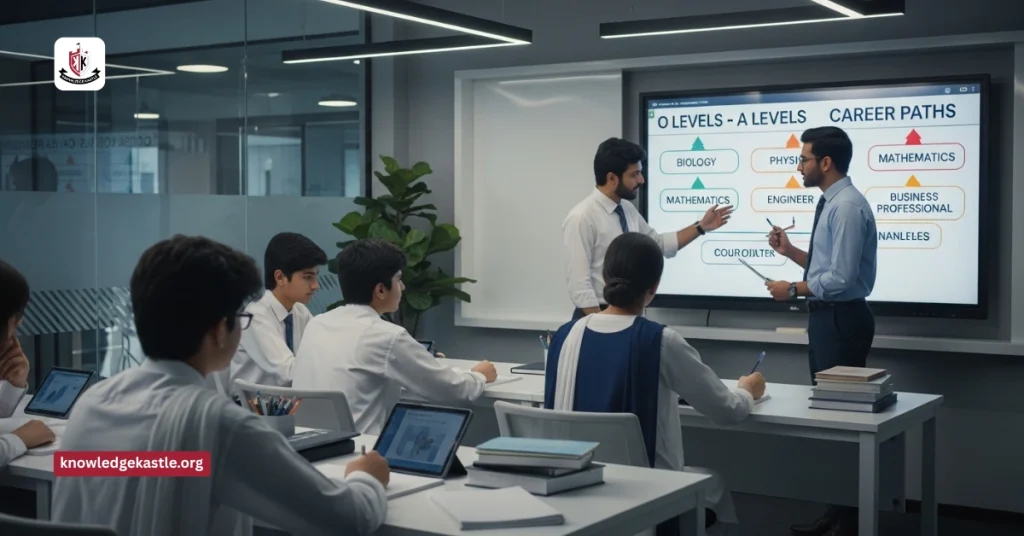
- O Level: O Levels primarily focus on building foundational knowledge across a broad range of subjects. While they provide essential academic skills, career options directly after O Level are generally limited to pre-university courses, vocational programs, or diplomas. Students at this stage often explore short-term certifications, skill-based training, or specialised courses to gain early work experience.
- A Level: In contrast, A Levels offer in-depth knowledge in a smaller set of chosen subjects. This specialised education not only strengthens subject expertise but also acts as a gateway to higher education, professional programs, and international opportunities. Completing A Levels significantly expands career prospects, enabling students to pursue university degrees in fields such as engineering, medicine, business, law, the social sciences, and the creative arts.
- Strategic Planning: Understanding the distinction between O-Level and A-Level career impact helps students plan their academic journey. By understanding how each level shapes opportunities, students can make informed choices regarding subject selection, further education, and long-term career paths, ensuring their efforts align with future goals.
- Leveraging Knowledge Kastle: Platforms like Knowledge Kastle provide students with guidance on how their subject choices at O and A Level can influence career options.
Through personalised learning paths and expert advice, students can identify suitable pathways, bridge knowledge gaps, and make confident decisions for their professional future.
1. Career Options After O Levels
After completing O Levels, students have several pathways to consider, each designed to prepare them for higher education, professional training, or early career exploration. Choosing the right option depends on the student’s interests, strengths, and long-term goals.
Academic Pathways:
Here are the Academic pathways:
- A Levels: The most common route after O Levels, A Levels allow students to specialise in selected subjects. This pathway provides in-depth knowledge and prepares students for competitive university programs in fields such as medicine, engineering, business, and the social sciences.
- International Baccalaureate (IB): For students seeking a broader education, the IB program offers a wide-ranging curriculum that balances academics, creativity, and critical thinking. It is particularly suited for those aiming for international universities or multidisciplinary fields.
- Foundation Programs: These are short-term courses designed to bridge knowledge gaps between O Level and university-level study. Foundation programs provide subject-specific preparation, improve academic skills, and equip students for a smoother transition into undergraduate programs.
Leveraging Knowledge Kastle: Platforms like Knowledge Kastle guide students in evaluating these pathways, helping them align their choices with personal strengths and career aspirations. With expert advice and structured resources, students can make informed decisions that lay the groundwork for future success.
Vocational and Skill-Based Paths
Not every student chooses the traditional academic route after O Levels. For those interested in practical skills or early-career entry, vocational and skill-based pathways offer valuable opportunities to gain expertise and begin professional development.
- Diploma Courses: Students can enroll in diplomas in areas such as Information Technology, Business Administration, Graphic Design, Hospitality, or Fashion. These programs provide focused training and prepare learners for both employment and further studies.
- Professional Certifications: Short certifications in coding, graphic design, accounting, digital marketing, or other technical skills help students earn practical credentials recognized by employers. These certifications help students build a competitive edge early in their careers.
- Short-Term Training Programs: Skill-oriented courses, workshops, and bootcamps provide hands-on experience in technical fields, enabling students to acquire competencies needed for immediate employment or freelance opportunities.
Leveraging Knowledge Kastle: Knowledge Kastle supports O Level students in identifying their strengths, exploring vocational options, and planning their next steps. The platform provides guidance for subject selection, career alignment, and skill development, ensuring that students are well-prepared whether they pursue A Levels, vocational courses, or professional certifications.
2. Career Options After A Levels
Completing A Levels significantly expands career and education opportunities, offering students the flexibility to pursue advanced studies, professional qualifications, and international pathways. The specialized knowledge gained during A Levels acts as a strong foundation for both academic and career success.
Higher Education Pathways:
Here are the higher education pathways:
- University Degrees: A Levels are recognized by universities worldwide and are considered a gold standard for undergraduate admissions. Students can pursue a wide range of disciplines, including Engineering, Medicine, Business, Law, Computer Science, Social Sciences, and Creative Arts. The in-depth preparation provided by A Levels equips students with the skills needed to excel in rigorous university programs.
- Specialized Diplomas and Foundation Programs: For students planning to study abroad, foundation programs and specialized diplomas offer a fast-track route to universities. These programs bridge gaps between school-level education and university requirements, ensuring that students are academically ready for higher studies in their chosen fields.
Platforms like Knowledge Kastle help A-level students navigate their career options by linking subject choices to potential university courses and professional paths. With expert guidance, personalized learning plans, and career-focused resources, students can make informed decisions that align their strengths, interests, and long-term goals.
Professional and Technical Careers
A Levels open doors to a wide range of professional and technical careers, providing students with the advanced knowledge and skills required to excel in their chosen fields.
- Medicine & Healthcare: Students who take A Levels in Biology, Chemistry, and Physics can pursue careers in medicine, dentistry, pharmacy, nursing, or other healthcare professions. A solid foundation in these subjects is essential for medical school and related professional programs.
- Engineering & Technology: A Levels in Physics, Mathematics, and Computer Science prepare students for various branches of engineering, including civil, mechanical, electrical, software, and aerospace. These subjects also provide a strong base for careers in technology, data science, and research.
- Business & Finance: Economics, Accounting, and Mathematics at A Level are ideal for students interested in business management, finance, entrepreneurship, and investment banking. These subjects equip learners with analytical and problem-solving skills that are highly valued in the corporate world.
- Creative Fields: Students interested in arts, design, media, or communication can leverage A Levels in relevant subjects to pursue careers in graphic design, fashion, film, advertising, journalism, and digital media.
- International Opportunities: One of the major advantages of A Levels is their global recognition. Graduates are eligible to apply to universities in the UK, USA, Canada, Australia, and many other countries. Platforms like Knowledge Kastle support students in preparing for international applications by providing guidance on subject selection, university choice, entrance exams, and application readiness.
Through personalized learning plans, subject-specific guidance, and career-focused resources, Knowledge Kastle helps students align their A Level choices with their professional ambitions, ensuring they are fully prepared for both local and international opportunities.
3. How to Choose the Right Career Path
Selecting the right career path after O or A Levels is a critical decision that requires self-awareness, research, and guidance. A thoughtful approach ensures that students align their education with future goals and opportunities.
- Identify Interests and Strengths: Start by assessing your skills, passions, and natural strengths. Self-assessment tools, personality tests, and reflective exercises can help you understand which career fields suit you best. Knowing your interests early allows you to focus on subjects and opportunities that match your abilities.
- Explore Subject Combinations: Your A Level subject choices play a pivotal role in determining career options. Selecting subjects that align with your desired field, such as Mathematics and Physics for engineering or Biology and Chemistry for medicine, creates a direct pathway toward higher education and professional opportunities.
- Seek Professional Guidance: Consulting career counselors, academic mentors, and online guidance platforms like Knowledge Kastle provide expert insights into career prospects, subject requirements, and educational pathways. Their advice helps students make informed decisions and avoid common pitfalls.
- Research Opportunities: Consider both local and international career prospects. Explore emerging fields such as Artificial Intelligence, Data Science, Digital Marketing, Renewable Energy, and Biotechnology, as these areas offer high growth potential and global relevance. Understanding the evolving job market ensures that your career choice is forward-looking and sustainable.
Knowledge Kastle offers personalized career guidance, linking subject combinations to suitable career paths. The platform also provides resources on emerging industries, international education opportunities, and step-by-step planning, helping students make strategic decisions for a successful future.
4. Role of Knowledge Kastle in Career Planning
Career planning after O and A Levels can feel overwhelming due to the multitude of options and the global opportunities available. Knowledge Kastle plays a pivotal role in guiding students through this process, ensuring they make informed decisions aligned with their strengths, interests, and long-term goals.
- Personalized Guidance: Knowledge Kastle analyzes each student’s academic performance, strengths, and interests to provide tailored career recommendations. This personalized approach helps students focus on realistic and rewarding pathways.
- Subject and University Advice: The platform guides students in selecting A Level subjects that align with their intended career paths and university requirements. By aligning academic choices with future goals, students are better positioned for success in higher education and professional programs.
- Skill Development: Beyond subject selection, Knowledge Kastle strengthens students’ readiness through interactive exercises, quizzes, and exam preparation resources. These tools help students build the knowledge and skills needed for both academic and professional growth.
- Resource Access: Students gain access to a wealth of resources, including career insights, workshops, mentorship programs, and guidance on emerging industries. This comprehensive support ensures that students can make informed and strategic decisions about their futures.
- Flexible Learning: Knowledge Kastle’s platform allows students to balance academic preparation with career exploration. Whether studying at home, revising subjects, or exploring career options, students can learn at their own pace without compromising either their academics or their future planning.
By integrating academic guidance with career planning tools, Knowledge Kastle empowers O and A Level students to take control of their educational and professional journeys, making the transition from school to higher education and careers smoother and more strategic.
Tips for a Successful Career Planning After O and A Levels
Planning your career after O and A Levels requires foresight, strategy, and consistent effort. By adopting the right approach, students can make informed decisions that align their education with their future aspirations.
1. Start Early: Begin exploring career options and subject choices well before completing O Levels. Early planning provides clarity and allows you to make strategic academic decisions.
2. Understand Yourself: Assess your interests, strengths, and skills. Knowing what you enjoy and where your aptitude lies helps you select suitable subjects and career paths.
3. Research Extensively: Explore local and international career opportunities, higher education programs, and emerging industries such as AI, digital marketing, and renewable energy. Being informed ensures your choices remain relevant and forward-looking.
4. Seek Guidance: Consult teachers, career counselors, mentors, and platforms like Knowledge Kastle. Expert advice can clarify doubts, provide insights into subject-to-career links, and help identify the most suitable pathways.
5. Align Subjects with Goals: Choose A Level subjects that complement your intended career path. This alignment ensures that your academic preparation supports your long-term aspirations.
6. Develop Relevant Skills: Beyond academics, focus on developing transferable skills such as critical thinking, communication, problem-solving, and technical abilities. Knowledge Kastle offers interactive exercises and practical resources to strengthen these skills.
7. Balance Academics and Career Exploration: While focusing on studies, dedicate time to career research, internships, or workshops. Maintaining a balance ensures that you are both academically strong and career-ready.
8. Stay Flexible and Open-Minded: Career paths may evolve over time. Be open to exploring new fields and opportunities as your interests, strengths, and the job market develop.
9. Set Achievable Goals: Break down long-term objectives into manageable steps. Celebrate small milestones to stay motivated and track your progress effectively.
10. Leverage Technology and Platforms: Use digital platforms like Knowledge Kastle to access personalized guidance, learning resources, career insights, and mentorship. These tools make career planning structured, strategic, and efficient.
By following these tips, students can navigate the transition from O and A Levels to higher education and professional careers with confidence, clarity, and a clear sense of direction.
Conclusion
Choosing a career path after O and A Levels is a critical step that shapes a student’s academic journey and professional future. While O Levels provide a broad foundation of knowledge and skills, A Levels offer specialized learning that opens doors to higher education, professional programs, and global opportunities. Understanding the differences, exploring available pathways, and aligning subject choices with long-term goals are essential for making informed decisions.
Platforms like Knowledge Kastle play a pivotal role in guiding students through this process. By offering personalized guidance, subject and university advice, skill-building resources, career insights, and flexible learning plans, Knowledge Kastle helps students navigate their educational and career choices strategically and confidently.
With careful planning, consistent effort, and the right support, students can make informed decisions, build relevant skills, and pursue rewarding careers that align with their strengths, interests, and aspirations. By leveraging tools like Knowledge Kastle, the journey from O and A Levels to higher education and professional success becomes structured, achievable, and empowering.
Frequently Asked Questions (FAQs)
1. What career options are available after O Levels?
After O Levels, students can pursue A Levels, the International Baccalaureate (IB), foundation programs, vocational diplomas, professional certifications, or short-term skill-based training depending on their interests and career goals.
2. How do A Levels influence career opportunities compared to O Levels?
A Levels provide in-depth knowledge in chosen subjects, opening doors to higher education, professional courses, and international opportunities. O Levels mainly prepare students with foundational skills for further study or vocational pathways.
3. How should I choose the right career path after O or A Levels?
Start by identifying your interests and strengths, exploring subject combinations, researching career options, and seeking guidance from career counselors, mentors, or platforms like Knowledge Kastle.
4. Can Knowledge Kastle help me select the right A-level subjects for my career?
Yes. Knowledge Kastle provides personalized guidance to align subject choices with career goals and university requirements, helping students make informed decisions.
5. What are some popular career fields after A Levels?
Popular fields include Medicine and Healthcare, Engineering and Technology, Business and Finance, Creative Arts, and Social Sciences. A-levels also provide opportunities for international mobility and higher education.
6. Are vocational or skill-based paths a good option after O Levels?
Absolutely. Diploma courses, professional certifications, and short-term training programs help students develop practical skills, gain early career experience, or prepare for specialized A Level or higher education courses.
7. How important is career research before choosing subjects or pathways?
Career research is critical. Understanding industry demands, emerging fields such as AI and data science, and university requirements ensures that academic and professional decisions align with long-term goals.
8. How can I develop skills alongside my academics?
Focus on critical thinking, problem-solving, communication, and technical abilities. Platforms like Knowledge Kastle provide interactive exercises and learning tools to strengthen both academic knowledge and transferable skills.
9. Can I pursue international education after A Levels?
Yes. A Levels are globally recognized, enabling students to apply to universities in the UK, USA, Canada, Australia, and other countries. Knowledge Kastle also provides guidance for international applications, exams, and subject alignment.
10. How can I balance academic preparation with career planning?
Maintain a structured schedule, prioritize study time, engage in career research or workshops, and leverage flexible learning platforms like Knowledge Kastle to manage both effectively without compromising either academics or career exploration.

0 Comments