

The world is changing faster than ever, and education is evolving to keep pace. Traditional classrooms, textbooks, and lecture-based methods are no longer sufficient to prepare students for the demands of a global, technologically driven, and interconnected society. Today’s learning environments emphasise adaptability, creativity, critical thinking, and digital fluency, skills that empower students to thrive in the 21st century.
Globally, educators, institutions, and policymakers are reimagining how knowledge is delivered, absorbed, and applied. From personalized learning platforms and AI-driven education to experiential learning and collaborative classrooms, the future of learning is dynamic, inclusive, and focused on preparing students not just to succeed academically, but to lead, innovate, and solve complex challenges.
This article explores the key trends, strategies, and innovations shaping education worldwide, highlighting How Education Is Evolving Globally to meet the needs of today’s learners and tomorrow’s leaders.
Education Is Evolving Globally: 7 Key Pillars Shaping the Future of Learning
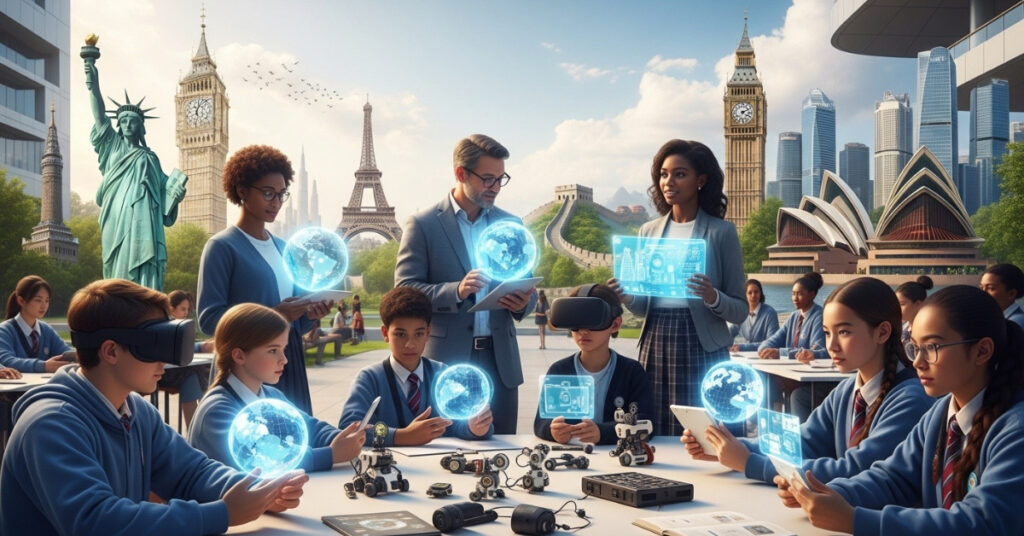
Education is evolving globally to meet the demands of a fast-changing, technology-driven world. Modern learning now focuses on personalised instruction, digital integration, critical thinking, emotional intelligence, global collaboration, hands-on experiences, and career readiness to prepare students for lifelong success.
1. Personalised & Adaptive Learning
The future of education is moving away from a one-size-fits-all approach. Personalised and adaptive learning is transforming classrooms by tailoring instruction to each student’s unique abilities, learning pace, and interests. This approach ensures that learners receive the support they need while being challenged to reach their full potential.
How Personalised & Adaptive Learning Works:
- Tailored Learning Paths: Advanced platforms analyse a student’s progress and customise lessons, exercises, and assessments to suit individual needs.
- Data-Driven Insights: Teachers use real-time data to understand student strengths and areas for improvement, allowing timely interventions and targeted support.
- Flexible Learning Pace: Students can progress faster in subjects they excel at while receiving additional guidance in areas they find challenging, ensuring mastery of concepts.
- Engaging & Relevant Content: Lessons are designed to match students’ interests, making learning more enjoyable, meaningful, and motivating.
- Integration of Technology: AI-driven tools, digital platforms, and learning apps facilitate adaptive learning, providing instant feedback and personalised recommendations.
- Encouraging Self-Directed Learning: Students take an active role in their education, setting goals, tracking progress, and making decisions about how they learn best.
Personalised and adaptive learning ensures that education is student-centred, efficient, and effective. It empowers learners to take control of their growth, promotes deeper understanding, and prepares them to succeed in a world that increasingly values independent thinking, creativity, and problem-solving.
The Impact on Students
Personalised and adaptive learning has a transformative effect on students, creating an education experience that is tailored, engaging, and highly effective. By meeting each learner where they are, this approach fosters academic excellence, confidence, and lifelong learning habits.
- Improved Academic Performance: Tailored instruction ensures that students master concepts at their own pace, resulting in deeper understanding and higher achievement.
- Enhanced Confidence and Motivation: When students see progress in areas where they struggled, they gain self-belief and motivation to tackle more complex challenges.
- Stronger Critical Thinking and Problem-Solving Skills: Adaptive learning encourages students to think independently and approach challenges strategically, enhancing analytical abilities.
- Increased Engagement: Learning content that aligns with students’ interests and abilities keeps them actively involved, reducing boredom and improving focus.
- Development of Self-Directed Learning Habits: Students take ownership of their education, set personal goals, track progress, and make informed decisions about their learning strategies.
- Better Retention and Long-Term Understanding: Adaptive systems reinforce knowledge through targeted practice and feedback, ensuring students retain concepts and apply them effectively.
- Preparedness for Future Challenges: Students become flexible, confident learners ready to adapt to changing academic, technological, and professional environments.
Through personalised and adaptive learning, students gain the skills, confidence, and mindset needed to succeed academically, professionally, and personally, preparing them for a future where continuous learning is essential.
2. Integration of Technology & AI in Education
Technology and Artificial Intelligence (AI) are revolutionizing the way students learn, teachers teach, and schools operate. By automating routine tasks, personalizing learning experiences, and providing real-time insights, AI and digital tools enhance both teaching and learning outcomes on a global scale.
How Technology & AI Are Transforming Education:
- Adaptive Learning Platforms: AI-driven platforms analyse student performance, adapt content to their learning pace, and provide customised exercises to ensure mastery of concepts.
- Interactive and Immersive Learning Tools: Virtual reality (VR), augmented reality (AR), and gamified platforms make learning engaging, hands-on, and memorable.
- Data-Driven Insights for Teachers: AI systems provide analytics on student performance, learning patterns, and areas of improvement, helping educators make informed decisions.
- Automation of Administrative Tasks: Technology reduces the burden of grading, attendance tracking, and lesson planning, allowing teachers to focus on instruction and mentorship.
- Global Learning Opportunities: Online platforms connect students with peers and educators worldwide, promoting collaboration, cross-cultural understanding, and global perspectives.
- Predictive Analytics for Personalised Support: AI predicts students’ learning challenges and suggests interventions, ensuring timely support before gaps become major obstacles.
- Encouraging Innovation and Creativity: Technology provides tools for coding, simulations, design projects, and digital research, fostering creativity and problem-solving skills.
The integration of technology and AI in education ensures that learning is more efficient, engaging, and personalised. It prepares students to thrive in a digital-first world, equips teachers with powerful instructional tools, and creates a flexible, future-ready educational environment.
The Impact on Students
The integration of technology and AI in education creates powerful learning experiences that help students become more capable, confident, and future-ready. By enhancing engagement and personalising support, technology ensures students develop essential skills needed to thrive in an increasingly digital world.
- More Engaging & Motivating Learning Experiences: Interactive tools like VR, AR, and gamified platforms make learning fun, immersive, and memorable, increasing curiosity and participation.
- Personalised Learning for Better Performance: AI tailors lessons based on individual progress, helping students overcome weaknesses and build on strengths more effectively.
- Instant Feedback & Faster Improvement: Digital platforms provide immediate insights into mistakes and progress, enabling students to correct errors quickly and learn more efficiently.
- Stronger Digital Literacy Skills: Students become confident in using technology, preparing them for future careers that require digital competence and tech-savviness.
- Enhanced Problem-Solving & Creativity: Access to digital tools, simulations, and design software encourages students to experiment, innovate, and think critically.
- Improved Collaboration & Global Connections: Online platforms allow students to work together across different regions and cultures, developing teamwork and communication skills.
- Greater Independence & Accountability: AI-powered tools encourage students to track progress, set goals, and manage learning independently, a key trait for lifelong learners.
- Preparation for Future Careers: By working with technology from an early age, students gain a competitive advantage in fields like STEM, AI, digital marketing, design, data science, and more.
Through these advancements, students become confident, tech-savvy, and adaptable individuals, fully prepared for the academic challenges, career opportunities, and global realities of the future.
3. Experiential & Hands-On Learning
Experiential and hands-on learning is reshaping global education by shifting the focus from passive listening to active participation. Instead of memorising concepts, students learn by doing, which helps them understand ideas deeply, retain information longer, and apply knowledge in real-life situations. This approach builds practical skills, creativity, and confidence, qualities essential for success in the modern world.
How Experiential & Hands-On Learning Works:
- Real-World Projects: Students work on practical tasks, like designing models, conducting experiments, or solving community issues, that connect classroom learning with real-life challenges.
- Problem-Based Learning (PBL): Learners tackle complex problems, research solutions, and present findings, strengthening critical thinking and analytical skills.
- Workshops, Labs & Field Activities: Science labs, robotics workshops, creative arts sessions, and educational field trips allow students to experience learning beyond textbooks.
- Collaboration & Team-Based Tasks: Students work in teams to build prototypes, conduct surveys, or create presentations, improving communication and teamwork.
- Use of Tools & Technology: Hands-on learning often includes using digital tools, software, simulations, and interactive equipment to understand concepts more effectively.
- Learning Through Exploration: Students are encouraged to ask questions, explore ideas, test hypotheses, and learn from trial and error, building resilience and curiosity.
- Integration with Real Industries: Internships, industry visits, and skill-based workshops expose learners to real workplaces, preparing them for future careers.
Experiential and hands-on learning builds practical competence, deeper understanding, and real-world readiness. It helps students connect theory with application, preparing them to innovate, lead, and solve challenges in an ever-changing world.
The Impact on Students
Experiential and hands-on learning has a powerful and lasting effect on students. By actively engaging in real-world tasks, learners develop essential skills that go far beyond textbooks, shaping them into confident, capable, and future-ready individuals.
- Deeper Understanding of Concepts: Students learn through direct experience, which strengthens comprehension and helps them retain information for longer periods.
- Enhanced Critical Thinking & Problem-Solving: Real-world challenges require students to analyse situations, think creatively, and come up with practical solutions.
- Greater Confidence & Independence: Completing projects and tasks on their own gives students a sense of achievement, boosting their self-confidence and independence.
- Improved Teamwork & Communication Skills: Collaborative activities teach students how to work effectively in teams, communicate ideas clearly, and lead group efforts when needed.
- Stronger Creativity & Innovation: Hands-on projects encourage experimentation, curiosity, and creative thinking, skills that drive innovation across industries.
- Better Application of Knowledge: Students learn to connect classroom theory with real-world practice, preparing them for higher education, careers, and daily life.
- Increased Engagement & Motivation: Active learning makes education more fun and meaningful, keeping students interested and motivated to explore new ideas.
- Preparation for Future Careers: Experiential learning develops practical skills, such as project management, research, and technology use, that employers value highly.
Through hands-on experiences, students become adaptive, skilled, and confident learners who can think critically, collaborate effectively, and take on real-world challenges with ease.
4. Global Collaboration & Cultural Awareness
Global collaboration and cultural awareness are transforming education worldwide by connecting students across borders, cultures, and languages. Instead of learning about the world only through textbooks, students now interact with peers globally, sharing ideas, solving problems together, and understanding different perspectives. This approach helps learners develop global mindsets, cultural sensitivity, and the ability to work in diverse environments, essential skills in today’s interconnected world.
How Global Collaboration & Cultural Awareness Works:
- Virtual Exchange Programs: Students participate in online cultural exchange sessions, collaborative projects, and discussions with peers from other countries, promoting cross-cultural understanding.
- Global Classroom Projects: Learners work with international teams on research, environmental studies, innovation challenges, and creative tasks that encourage cooperation across borders.
- Multilingual Learning Opportunities: Exposure to different languages through global interactions improves communication skills and builds confidence in connecting with people from diverse backgrounds.
- Cross-Cultural Activities & Events: Schools host cultural days, international festivals, and global awareness workshops that celebrate diversity and teach the importance of respect and empathy.
- Use of Technology for Global Communication: Video conferencing, digital platforms, and collaborative tools allow students to connect instantly with classrooms worldwide, breaking geographical boundaries.
- Global Issues & Social Impact Projects: Students engage in topics like climate change, sustainability, human rights, and global health, developing a sense of responsibility toward worldwide challenges.
- Partnerships with Global Institutions: Schools collaborate with international organisations, NGOs, and educational institutions to offer global internships, leadership programs, and cultural training.
Global collaboration and cultural awareness prepare students to navigate an increasingly interconnected world. It helps them appreciate diversity, communicate effectively, and work as global citizens capable of leading, innovating, and solving shared challenges.
The Impact on Students
Global collaboration and cultural awareness have a profound and life-changing impact on learners. By engaging with peers from different countries and cultures, students develop essential skills that shape them into open-minded, confident, and globally aware individuals.
- Broader Worldview & Cultural Sensitivity: Interacting with people from diverse backgrounds helps students understand, respect, and appreciate cultural differences, making them more inclusive and empathetic.
- Improved Communication & Social Skills: Cross-cultural communication builds strong interpersonal abilities, teaching students how to express ideas clearly and adapt their communication style.
- Enhanced Problem-Solving through Diverse Perspectives: Working with international teams exposes learners to different ways of thinking, fostering creativity and stronger problem-solving abilities.
- Growth in Confidence & Leadership: Participating in global projects encourages students to take initiative, share ideas confidently, and lead with awareness and sensitivity.
- Better Preparedness for Global Careers: As businesses increasingly operate globally, culturally aware students become highly competitive and better equipped for international career opportunities.
- Stronger Collaboration & Teamwork Skills: Students learn how to cooperate effectively in multicultural teams, manage differences, and work toward shared goals.
- Development of Global Citizenship: Learners develop a deeper understanding of global issues and feel a sense of responsibility toward making a positive impact in the world.
- Increased Motivation & Curiosity: Exposure to global cultures sparks curiosity and inspires students to explore new ideas, languages, and opportunities.
Through global collaboration and cultural awareness, students become confident communicators, empathetic leaders, and globally conscious individuals ready to thrive in a multicultural world.
5. Emphasis on Critical Thinking & Problem-Solving
Critical thinking and problem-solving are at the heart of modern education, preparing students to analyse complex situations, make informed decisions, and innovate in real-world contexts. Rather than memorising facts, learners are encouraged to question, evaluate, and create solutions, building skills that are essential for academic success and future careers.
How Critical Thinking & Problem-Solving Works:
- Analytical Exercises: Students examine case studies, research data, and real-life scenarios to identify key issues, patterns, and potential solutions.
- Debates and Discussions: Classroom debates and group discussions encourage learners to evaluate multiple viewpoints and defend their ideas logically.
- Problem-Based Learning (PBL): Students tackle real-world problems, research potential solutions, and implement strategies to resolve challenges effectively.
- Scenario Simulations: Role-playing exercises and simulations allow students to test their problem-solving skills in controlled, realistic situations.
- Collaborative Problem-Solving: Group activities require students to work together, combining diverse perspectives to reach innovative and practical solutions.
- Use of Technology & Tools: Digital platforms, simulations, and data analysis tools support students in exploring, testing, and validating their solutions.
- Reflective Thinking: Teachers guide students to reflect on outcomes, understand mistakes, and iterate on solutions, fostering continuous improvement.
Focusing on critical thinking and problem-solving equips students to analyse challenges, make effective decisions, and approach complex situations with creativity and confidence.
The Impact on Students
Emphasising critical thinking and problem-solving has a lasting impact, transforming students into independent, confident, and capable learners who can adapt to any challenge.
- Enhanced Analytical Skills: Students learn to evaluate information critically and identify the most effective solutions.
- Greater Creativity & Innovation: Tackling real-world problems encourages learners to think outside the box and generate original ideas.
- Improved Decision-Making: Students become adept at making informed, logical, and strategic decisions under pressure.
- Stronger Collaboration & Teamwork: Group problem-solving projects enhance communication, negotiation, and leadership skills.
- Increased Confidence & Independence: Successfully solving challenges boosts self-belief and encourages learners to take initiative.
- Better Academic & Career Readiness: Critical thinking prepares students for higher education and careers that demand innovative solutions and strategic thinking.
- Resilience & Adaptability: Facing and overcoming challenges helps students develop persistence, flexibility, and a growth mindset.
Through critical thinking and problem-solving, students become innovative, resilient, and capable individuals ready to excel in academics, careers, and the complex challenges of the modern world.
6. Focus on Emotional Intelligence & Social Skills
Emotional intelligence (EI) and social skills are increasingly recognised as essential for success in school, careers, and life. Modern education emphasises not only academic knowledge but also the ability to understand emotions, communicate effectively, and build strong relationships. By developing EI and social competence, students become more empathetic, resilient, and collaborative.
How Emotional Intelligence & Social Skills Are Developed:
- Self-Awareness Activities: Students reflect on their emotions, strengths, and areas for improvement to better understand themselves and their reactions.
- Empathy Building Exercises: Role-playing, storytelling, and discussions help learners understand and respect others’ perspectives and feelings.
- Effective Communication Training: Classroom activities and group work focus on clear verbal, non-verbal, and written communication skills.
- Conflict Resolution & Negotiation: Students practice resolving disagreements constructively, finding common ground, and collaborating harmoniously.
- Teamwork & Collaboration: Group projects and collaborative tasks teach learners how to cooperate, share responsibilities, and support peers.
- Mindfulness & Stress Management: Techniques like reflection, meditation, and time management help students regulate emotions and maintain focus under pressure.
- Leadership & Social Responsibility: Activities such as mentoring, community projects, and group leadership roles encourage students to lead with empathy and integrity.
Focusing on emotional intelligence and social skills ensures students are not only academically competent but also socially adept, emotionally balanced, and capable of positive interpersonal interactions.
The Impact on Students
Developing emotional intelligence and social skills significantly influences students’ personal growth, relationships, and future success.
- Improved Relationships: Students build stronger connections with peers, teachers, and family through empathy and effective communication.
- Enhanced Self-Confidence: Understanding and managing emotions boosts self-esteem and decision-making abilities.
- Better Collaboration & Teamwork: Learners contribute effectively to group tasks, appreciating diverse perspectives and working toward shared goals.
- Resilience & Stress Management: Students learn to cope with challenges, setbacks, and pressures constructively.
- Leadership Development: Socially intelligent students can inspire, guide, and motivate others in group and professional settings.
- Increased Academic Engagement: Emotionally aware learners are more focused, motivated, and able to manage their learning independently.
- Preparation for Real-World Success: EI and social skills equip students to thrive in professional environments, multicultural settings, and personal relationships.
Through cultivating emotional intelligence and social skills, students become well-rounded, empathetic, and confident individuals ready to navigate complex social and professional landscapes.
7. Preparing Students for Future Careers
Education today goes beyond academics; it is designed to equip students with the skills, knowledge, and mindset necessary for future careers. knowledge kastle and similar forward-thinking institutions focus on preparing learners for the dynamic and competitive professional world, ensuring they are career-ready, adaptable, and capable of thriving in any industry.
How Students Are Prepared for Future Careers:
- Career-Focused Guidance: Teachers provide personalised mentorship, helping students explore career options aligned with their interests, strengths, and goals.
- Skill Development Programs: Courses and workshops focus on critical skills such as coding, data analysis, communication, leadership, and problem-solving.
- Internships & Real-World Exposure: Students gain hands-on experience through internships, industry visits, and project-based learning connected to real workplaces.
- Entrepreneurial Thinking: Learners are encouraged to innovate, create business ideas, and develop entrepreneurial skills, fostering initiative and self-reliance.
- Networking & Professional Skills: Students learn networking, presentation, negotiation, and teamwork skills that are vital in professional environments.
- Use of Modern Technology: Integration of digital tools, AI, and other technological resources prepares learners for technology-driven careers.
- Soft Skills & Emotional Intelligence: Emphasis on communication, collaboration, adaptability, and resilience ensures students can succeed in diverse workplace settings.
- Global Competence: Exposure to international trends, cross-cultural collaboration, and global perspectives equips students to work effectively in multicultural and global industries.
By combining academic excellence with career-oriented learning, students are prepared to confidently pursue their professional goals, adapt to evolving industries, and excel in a competitive global workforce.
The Impact on Students
Career-focused education shapes students into well-prepared, competent, and confident individuals, ready to meet the demands of the modern professional world.
- Clear Career Direction: Students develop clarity about their professional paths, goals, and next steps after graduation.
- Practical Experience & Readiness: Internships and real-world projects give learners hands-on experience that enhances employability.
- Enhanced Confidence & Independence: Career preparation builds self-assurance, helping students take initiative and make informed professional decisions.
- Strong Skill Set: Students acquire a balanced combination of technical skills, soft skills, and leadership abilities highly valued by employers.
- Adaptability & Problem-Solving: Exposure to real challenges prepares learners to navigate workplace complexities and adapt to change.
- Professionalism & Work Ethic: Career preparation instils discipline, accountability, and a strong sense of responsibility.
- Global Readiness: Students are equipped to thrive in international environments, understand cross-cultural dynamics, and contribute effectively in global industries.
Through career-oriented education, students become future-ready professionals, capable of excelling in their chosen fields and contributing meaningfully to society.
Conclusion
The landscape of education is evolving rapidly, driven by technology, globalisation, and a deeper understanding of how students learn best. From personalised and adaptive learning to experiential projects, global collaboration, and career-focused skill development, the future of learning prioritises student-centred, practical, and future-ready education.
By integrating technology, fostering critical thinking, nurturing emotional intelligence, and encouraging creativity, schools are preparing students not only to excel academically but also to thrive in an ever-changing world. Learners today are gaining the skills, confidence, and global perspective necessary to become innovative thinkers, empathetic leaders, and adaptable professionals.
Ultimately, the future of education is about empowering every student to take charge of their learning journey, explore their potential, and confidently navigate the challenges and opportunities of tomorrow. As education continues to evolve globally, it promises a generation of lifelong learners who are prepared, resilient, and capable of making meaningful contributions to society.
FAQs
1. What is personalised learning?
Personalised learning tailors education to each student’s unique needs, strengths, and pace. It ensures that learners receive the right level of challenge and support to reach their full potential.
2. How is AI changing education?
AI provides adaptive learning platforms, instant feedback, data-driven insights for teachers, and customised resources for students. It helps make learning more efficient, engaging, and personalised.
3. What is experiential learning?
Experiential learning is learning by doing. Students engage in real-world projects, experiments, or simulations that help them understand concepts deeply and apply knowledge practically.
4. How does global collaboration bant in modern education?
Critical thinking teaches students to analyse information, evaluate alternatives, and solve problems effectively. It is essential for academic success, decision-making, and innovation in real-world scenarios.
6. How are emotional intelligence and social skills developed in schools?
Schools develop these skills through activities like teamwork, debates, role-playing, mindfulness exercises, and leadership opportunities. Students learn empathy, communication, resilience, and collaboration.
7. What skills are most important for future careers?
Future-ready skills include problem-solving, critical thinking, communication, collaboration, adaptability, digital literacy, and leadership. Hands-on experience and career guidance also play a key role.
8. How does technology prepare students for the future?
Technology teaches digital literacy, innovation, and adaptability. Tools like simulations, coding software, and online collaboration platforms prepare students for modern workplaces and global challenges.
9. How does hands-on learning improve engagement?
Hands-on learning makes education interactive and practical, allowing students to explore, experiment, and solve real-world problems. This approach increases motivation and deepens understanding.
10. Can students be prepared for global challenges through education?
Yes. Through personalised learning, global collaboration, technology integration, and a focus on emotional intelligence and problem-solving, students develop the skills, mindset, and confidence to tackle global challenges effectively.

0 Comments