



Confused between academic education or skill-based training for future success? The right choice depends on career goals and industry demands. Students pursuing Cambridge O Level pathways, A Level studies, or foundation learning programs benefit most when education is combined with practical skill development for long-term career growth.
In today’s fast-evolving world, students and professionals face a critical decision: should they focus on formal education or prioritize skill-based training? While traditional education provides foundational knowledge, theoretical understanding, and academic credentials, skill training emphasizes practical abilities, real-world application, and industry-ready expertise.
Both paths offer unique advantages, but the key question remains: which path better prepares individuals for long-term success? The answer often depends on personal goals, career aspirations, and the demands of modern industries. By understanding the strengths, limitations, and potential outcomes of education and skill training, learners can make informed decisions that align with their ambitions.
This article explores the differences between education and skill training, their respective benefits, and how combining the two can provide a balanced approach to achieving professional and personal success.
Education vs Skill Training: Choosing the Right Path for Long-Term Success
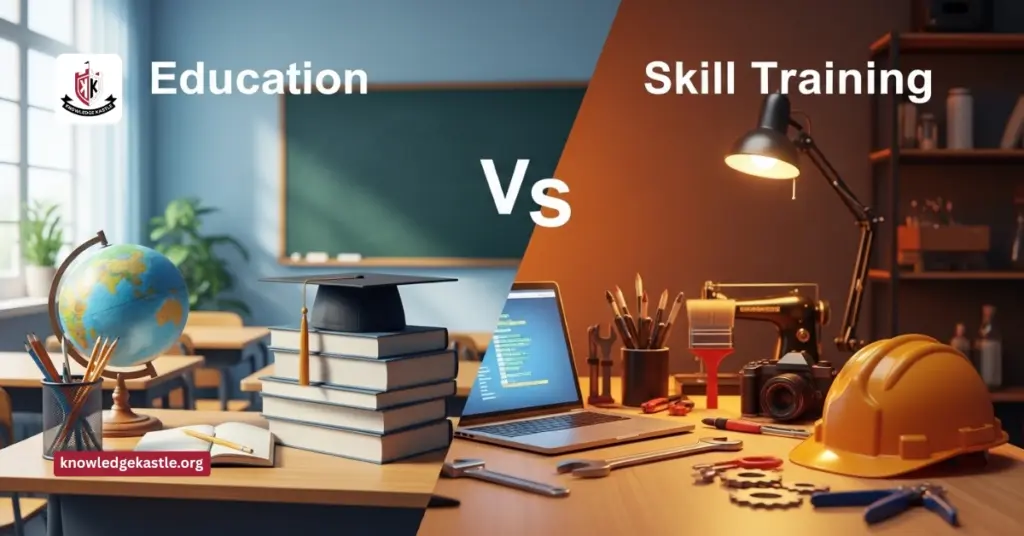
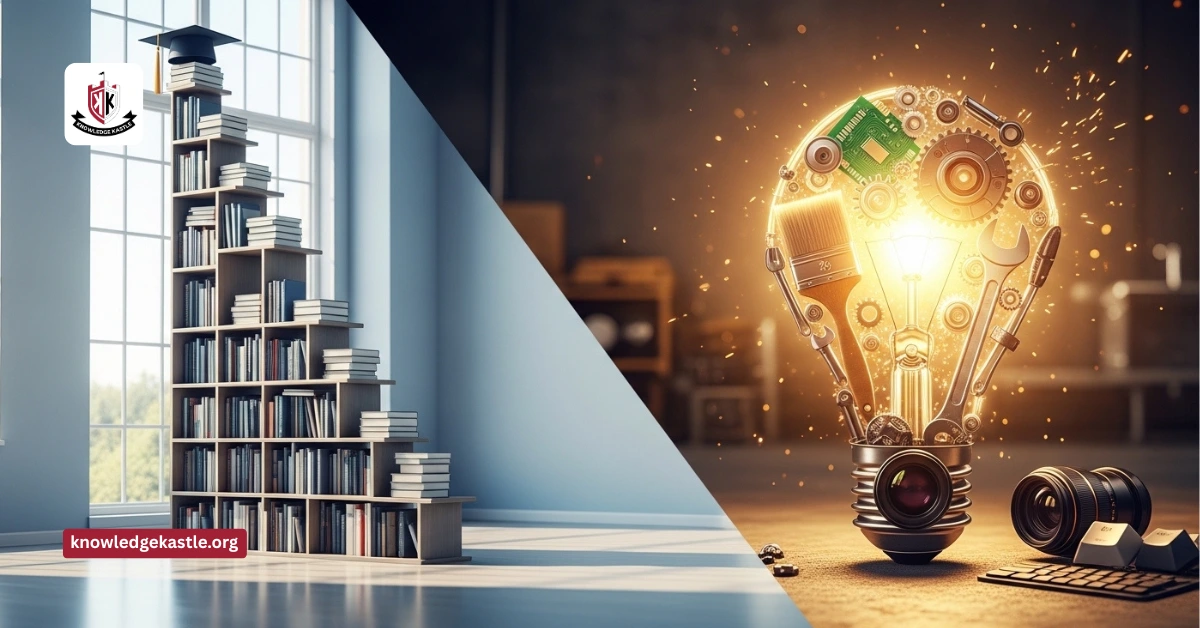
Education vs skill training is a key debate in today’s career-driven world. While education builds strong theoretical foundations and credentials, skill training delivers practical, job-ready expertise. Understanding both paths helps learners choose wisely or combine them for sustainable growth, employability, and long-term professional success.
1. Understanding Academic Education
Academic education refers to the traditional system of learning, where students gain structured knowledge through schools, colleges, and universities. It focuses on theory, conceptual understanding, and broad-based learning across subjects, providing a foundation for higher education and professional growth.
Key Features of Academic Education:
- Structured Curriculum: Academic education follows a systematic curriculum designed to build knowledge progressively, covering core subjects like mathematics, sciences, languages, and humanities.
- Theoretical Knowledge: Emphasis is placed on understanding concepts, principles, and frameworks that form the basis of various fields.
- Credential Recognition: Degrees, diplomas, and certificates earned through academic education are widely recognized by employers, universities, and professional institutions worldwide.
- Preparation for Higher Studies: Academic education equips students with the qualifications needed to pursue advanced degrees and specialized programs.
- Critical Thinking & Analytical Skills: Through problem-solving, research, and examinations, students develop analytical abilities and logical reasoning.
- Exposure to Broad Knowledge: Learners gain a wide perspective across subjects, encouraging interdisciplinary understanding and intellectual curiosity.
How Academic Education Contributes to Success:
- Provides credibility and formal recognition for career advancement.
- Prepares students for competitive exams, higher education, and professional courses.
- Develops foundational skills essential for critical thinking, communication, and problem-solving.
- Encourages holistic growth by exposing students to diverse subjects and experiences.
Academic education lays a strong theoretical foundation, offering stability, credibility, and a platform for long-term learning and career progression.
2. The Value of Skill Training
Skill training focuses on practical, hands-on learning that equips individuals with specific abilities directly applicable to real-world jobs and industries. Unlike traditional academic education, which emphasizes theory, skill training prioritizes mastery of tasks, problem-solving, and competence in professional settings.
Key Features of Skill Training:
- Hands-On Learning: Learners gain practical experience by working on real projects, simulations, or industry-standard tools, enhancing their readiness for the workplace.
- Industry-Relevant Skills: Training is aligned with current market demands, preparing students for careers in technology, business, creative arts, healthcare, and more.
- Shorter Learning Cycles: Skill-based programs often take less time than full academic degrees, allowing learners to enter the workforce sooner.
- Continuous Adaptability: Programs focus on upskilling and reskilling, enabling individuals to adapt to evolving industry trends and technologies.
- Certification & Recognition: Professional certifications validate expertise and can significantly boost employability.
- Practical Problem-Solving: Students learn to tackle real challenges, improving decision-making, innovation, and efficiency.
How Skill Training Contributes to Success:
- Career Readiness: Prepares learners to perform effectively in professional environments from day one.
- Faster Entry into the Workforce: Enables individuals to start earning and gaining experience earlier.
- Enhanced Employability: Possessing specific skills makes candidates more attractive to employers.
- Confidence & Independence: Practical mastery of tasks builds self-reliance and confidence in professional settings.
- Flexibility & Lifelong Learning: Encourages continual learning, adapting skills to meet changing industry needs.
Skill training equips learners with practical expertise, industry readiness, and the ability to deliver results, making it an essential path for those aiming to succeed in the modern workforce.
3. Key Differences Between Education and Skill Training
While both academic education and skill training aim to prepare individuals for success, they do so through different approaches. Understanding these differences helps students and professionals make informed decisions about which path, or combination of paths, best suits their goals.
Primary Differences:
- Focus of Learning:
- Academic Education: Emphasizes theoretical knowledge, conceptual understanding, and broad-based learning.
- Skill Training: Prioritizes practical application, hands-on tasks, and mastery of specific skills.
- Time Commitment:
- Academic Education: Typically requires several years of study, culminating in degrees or diplomas.
- Skill Training: Often shorter in duration, enabling faster entry into the workforce.
- Career Pathway:
- Academic Education: Prepares students for higher studies, research, and professions requiring formal credentials.
- Skill Training: Directly prepares learners for specific job roles and industry tasks.
- Assessment Methods:
- Academic Education: Exams, assignments, and theoretical assessments dominate evaluation.
- Skill Training: Performance-based assessments, projects, and practical demonstrations measure competence.
- Flexibility and Adaptability:
- Academic Education: Provides a broad foundation but may require further learning to adapt to specific industries.
- Skill Training: Highly adaptable, focusing on current market needs and technological advancements.
- Outcome Recognition:
- Academic Education: Degrees and certificates are widely recognized for higher education and formal career pathways.
- Skill Training: Certifications demonstrate expertise and employability in specific roles or industries.
- Learning Style:
- Academic Education: Structured, classroom-based, and guided by curriculum.
- Skill Training: Interactive, hands-on, and often mentor-driven, emphasizing practical experience.
Understanding these distinctions allows students to choose the path that aligns with their career goals, learning style, and personal ambitions, or combine both approaches for a balanced and competitive advantage.
4. How Each Path Prepares You for the Job Market
Both academic education and skill training offer unique benefits when it comes to preparing students and professionals for the workforce. Understanding how each path contributes to career readiness can help learners make strategic decisions.
Academic Education and Job Preparation:
- Foundational Knowledge: Provides a strong theoretical understanding of subjects, enabling graduates to adapt to diverse professional roles.
- Analytical & Problem-Solving Skills: Through research, assignments, and exams, students develop critical thinking and analytical capabilities that are valued in many industries.
- Credential Recognition: Degrees and diplomas are often required for entry into formal sectors, professional roles, and higher education programs.
- Opportunities for Specialized Careers: Fields such as medicine, engineering, law, and academia rely on formal academic qualifications.
- Transferable Skills: Communication, teamwork, and project management skills developed during academic programs are applicable across industries.
Skill Training and Job Preparation:
- Practical Expertise: Learners gain hands-on experience with tools, techniques, and industry processes, making them job-ready from day one.
- Industry Relevance: Training programs are designed based on current market demands, ensuring graduates possess in-demand skills.
- Faster Employment: Shorter, focused programs enable learners to enter the workforce sooner than traditional academic paths.
- Problem-Solving in Real Scenarios: Exposure to practical challenges develops decision-making abilities and adaptability in professional environments.
- Enhanced Confidence and Independence: Practical mastery instills confidence, enabling learners to perform tasks efficiently and autonomously.
By understanding how academic education and skill training each prepare individuals for the job market, learners can strategically choose a path, or combine both, to maximize employability, practical expertise, and long-term career growth.
5. Advantages of Combining Education and Skills
In today’s competitive world, relying solely on academic education or skill training may limit opportunities. Combining both approaches allows individuals to gain theoretical knowledge and practical expertise, providing a well-rounded foundation for career success.
Benefits of Integrating Education and Skill Training:
- Enhanced Employability: Employers increasingly value candidates who possess both academic qualifications and practical skills, making them more competitive in the job market.
- Balanced Knowledge and Application: Academic education provides concepts and frameworks, while skill training enables hands-on application, ensuring a comprehensive understanding.
- Adaptability in a Changing Job Market: A combination of theoretical knowledge and practical experience equips learners to adapt to evolving industry trends and technology.
- Faster Career Progression: Skilled professionals with formal education often advance more quickly, as they can understand complex concepts and apply them effectively.
- Broader Career Opportunities: Having both education and skills opens doors to multiple career paths, including specialized roles, leadership positions, and entrepreneurship.
- Confidence and Competence: The blend of knowledge and hands-on ability builds confidence, independence, and problem-solving skills, essential for professional success.
- Lifelong Learning Mindset: Exposure to both academic and skill-based learning encourages continuous learning and self-improvement throughout one’s career.
By combining education and skill training, individuals can maximize their potential, stand out to employers, and thrive in both traditional and modern career paths, making this integrated approach an ideal strategy for long-term success.
6. Choosing Based on Career Goals
Selecting between academic education, skill training, or a combination of both should ultimately depend on your career aspirations and long-term objectives. Understanding how each path aligns with your goals ensures that your efforts lead to meaningful success.
How to Choose Based on Career Goals:
- Identify Your Desired Career Path: Determine whether your chosen profession requires formal qualifications, practical skills, or both. For example, medicine or engineering requires academic credentials, while fields like digital marketing or coding emphasize skills.
- Evaluate Industry Requirements: Research the skills, certifications, and degrees preferred by employers in your target industry to make informed decisions.
- Assess Your Strengths and Interests: Choose a path that aligns with your natural abilities and passions, ensuring both enjoyment and proficiency in your work.
- Consider Flexibility and Growth Opportunities: Some careers allow for skill-based entry with on-the-job learning, while others demand formal education first. Understand which option provides better long-term growth.
- Blend Paths Where Necessary: In many cases, combining education with skill training offers the best of both worlds, preparing you for complex roles and leadership positions.
- Plan for Higher Education or Certifications: If you aim for advanced degrees or global opportunities, ensure your path includes the necessary academic qualifications alongside relevant skills.
By aligning your educational choices with your career goals, you can strategically select a path that maximizes employability, personal growth, and long-term professional success, ensuring every step contributes meaningfully toward your ambitions.
7. Global Trends in Education & Skill Development
The world of learning and career preparation is evolving rapidly, influenced by technological advancements, globalization, and changing industry demands. Understanding global trends helps students and professionals make informed decisions about whether to focus on academic education, skill training, or a combination of both.
Key Global Trends:
- Integration of Technology: Online learning platforms, virtual labs, and AI-driven educational tools are making both academic education and skill training more accessible and personalized.
- Emphasis on Skill-Based Competencies: Employers worldwide are increasingly valuing practical skills, critical thinking, problem-solving, and adaptability over traditional degrees alone.
- Lifelong Learning and Upskilling: Professionals are continuously upgrading skills to stay relevant, with micro-courses, certifications, and workshops becoming standard practice.
- Interdisciplinary Learning: Combining knowledge from multiple fields, such as technology, business, and design, fosters innovative thinking and versatility in the workforce.
- Global Collaboration & Remote Work: Exposure to international teams and projects encourages cross-cultural understanding, digital collaboration, and real-world skill application.
- Hybrid Learning Models: Education now blends classroom learning with practical, project-based, and experiential approaches, ensuring a balance between theory and application.
- Credential Diversification: Employers recognize a mix of formal degrees, certifications, and skill endorsements, highlighting the value of a combined educational approach.
By keeping pace with these global trends, learners can strategically choose educational paths that not only meet local standards but also provide international opportunities, market-relevant skills, and adaptability for future careers.
8. Real-Life Success Stories from Both Paths
Understanding how academic education and skill training translate into real-world success can inspire students to make informed choices. Many individuals have achieved remarkable careers by following either path or by combining both approaches effectively.
Examples from Academic Education:
- Engineers and Doctors: Professionals who pursued formal degrees in engineering, medicine, or law demonstrate how academic education provides the necessary foundation for high-skill careers that require formal credentials.
- Researchers and Academics: Individuals in research, higher education, and scientific fields rely on strong theoretical knowledge acquired through traditional education to make impactful contributions.
Examples from Skill Training:
- Entrepreneurs and Technologists: Many successful tech innovators, coders, and digital marketers started with skill-based programs, acquiring hands-on expertise that allowed them to create businesses and drive innovation.
- Creative Professionals: Artists, designers, chefs, and craftsmen often thrive through practical training and apprenticeships, proving that skills can lead to successful and fulfilling careers.
Combined Approach:
- Balanced Professionals: Some of the most successful individuals pursue degrees while simultaneously learning practical skills, such as engineers mastering coding, business graduates learning digital marketing, or medical professionals gaining management skills. This combination creates versatile, adaptable, and competitive professionals.
These success stories illustrate that both academic education and skill training have the potential to lead to achievement and fulfillment. The key is to align the chosen path with personal interests, career goals, and opportunities for continuous learning and growth.
Conclusion
In today’s rapidly changing world, both academic education and skill training play critical roles in preparing individuals for success. Academic education provides a strong theoretical foundation, critical thinking abilities, and formal credentials essential for higher studies and specialized professions.
On the other hand, skill training equips learners with practical expertise, industry-relevant competencies, and hands-on experience, enabling faster workforce entry and adaptability in dynamic careers. While each path has its distinct advantages, the most effective approach often lies in combining both education and skills.
This integrated strategy ensures individuals gain a well-rounded perspective, are prepared for real-world challenges, and remain competitive in the global job market. By understanding personal goals, strengths, and industry demands, learners can make informed decisions that maximize growth, opportunity, and long-term success.
Ultimately, success is not determined by choosing one path over the other but by aligning learning with purpose, action, and continuous growth, creating professionals who are knowledgeable, skilled, and ready to thrive in the modern world.
FAQs
1. What is the main difference between academic education and skill training?
Academic education focuses on theoretical knowledge and formal credentials, while skill training emphasizes practical, hands-on abilities directly applicable to jobs.
2. Can I succeed with only skill training?
Yes, many professions, especially in technology, trades, and creative industries, value practical skills, certifications, and experience over formal degrees.
3. Is formal education still necessary in today’s job market?
Yes, for careers that require advanced qualifications, such as medicine, law, engineering, or academia, formal education is essential.
4. Can I combine education and skill training?
Absolutely. Combining both allows you to gain theoretical knowledge and practical expertise, making you more competitive and adaptable in the job market.
5. Which path is faster to enter the workforce?
Skill training programs are often shorter and more focused, allowing learners to start working sooner than traditional academic education.
6. How do I decide which path is right for me?
Consider your career goals, interests, strengths, industry demands, and the type of learning you prefer: practical, theoretical, or both.
7. Do employers value skill training certifications?
Yes, industry-recognized certifications demonstrate competence and hands-on expertise, often increasing employability.
8. Can skill training lead to higher education opportunities?
In many cases, practical skills complement academic studies and can enhance applications for higher education, especially in specialized programs.
9. How do global trends affect the choice between education and skill training?
Global trends show a growing demand for skills, digital literacy, and lifelong learning, making a combined approach increasingly valuable.
10. What is the best approach for long-term success?
A balanced combination of academic education and skill development provides strong theoretical knowledge, practical experience, adaptability, and career readiness for long-term growth.


0 Comments