



Should I choose Cambridge or Edexcel? It’s a question that almost every student and parent faces when stepping into the world of international education. Both exam boards are highly respected worldwide, offering qualifications like IGCSEs and A Levels that open doors to prestigious universities and future careers.
When it comes to international education, two names often dominate the conversation: Cambridge Assessment International Education (CAIE) and Pearson Edexcel. Both are globally recognized exam boards that offer qualifications such as IGCSEs and A Levels, opening doors to top universities and career opportunities worldwide. However, while they share the same British roots, they differ in teaching approaches, assessment styles, grading systems, and subject flexibility.
For students, the choice between Cambridge and Edexcel can significantly impact not only their academic journey but also their learning experience and prospects. Parents and educators, too, often find themselves weighing which board best matches their child’s strengths, whether it’s the more traditional and exam-focused approach of Cambridge or the modular, coursework-friendly structure of Edexcel.
Get a simple breakdown of Cambridge vs Edexcel to help you choose the board that matches your goals. Clear, friendly, and easy to understand.
In this article, we’ll break down the key differences between the two boards, highlight their pros and cons, and provide practical insights to help you answer one critical question: Which exam board is right for you?
What is Cambridge (CAIE)?
Cambridge Assessment International Education (CAIE), often referred to simply as Cambridge International, is part of the University of Cambridge in the UK. It is one of the world’s largest and most respected exam boards, offering qualifications to over 10,000 schools in more than 160 countries.
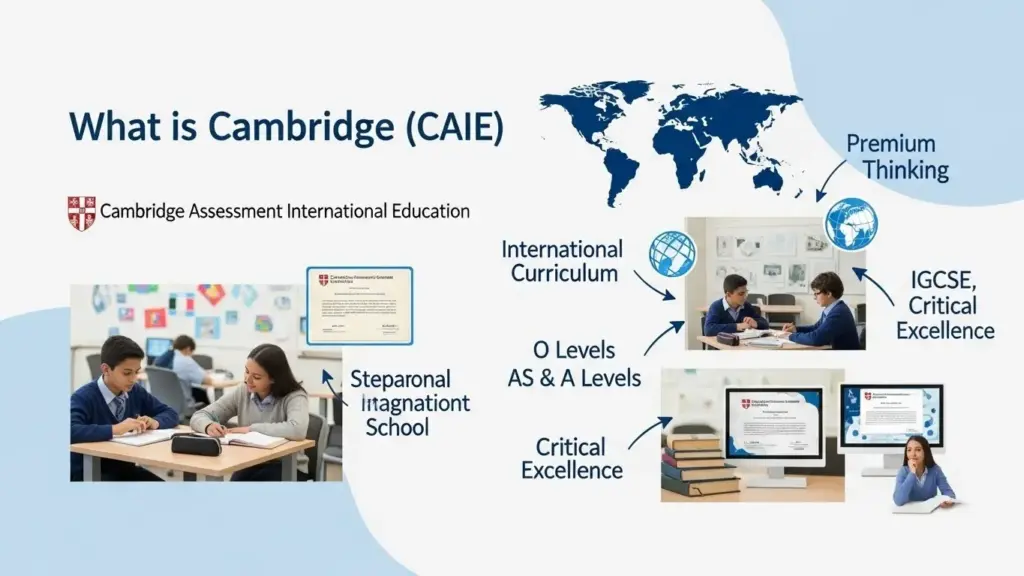
Cambridge is best known for its IGCSE (International General Certificate of Secondary Education) and A Level (Advanced Level) programs. These qualifications follow the British curriculum and are recognized by leading universities and employers across the globe.
The Cambridge system is often regarded as rigorous and academically challenging, with a strong emphasis on critical thinking, problem-solving, and in-depth subject knowledge. Its exams are usually linear, meaning students take most of their assessments at the end of the course rather than in smaller modules. This encourages long-term learning and prepares students for higher education, where final exams play a major role.
Key Highlights of Cambridge (CAIE):
- Global Recognition: Accepted by top universities in the UK, USA, Canada, Australia, and other countries.
- Wide Subject Range: Offers more than 70 subjects at IGCSE and over 55 subjects at A Level, allowing flexibility and choice.
- Assessment Style: Primarily end-of-course written exams, with limited coursework or modular assessments.
- Reputation: Known for being challenging, traditional, and academically demanding.
- Focus on Skills: Develops research skills, analytical ability, and independent thinking.
Best suited for students who:
- Enjoy in-depth subject exploration.
- They are strong in essay-writing and critical thinking.
- Aim for admission into top international universities.
Cambridge is ideal for students who are strong in academics, comfortable with high-stakes final exams, and aiming for admission into competitive universities worldwide.
What is Edexcel?
Edexcel, officially known as Pearson Edexcel, is a UK-based exam board owned by Pearson, the world’s largest education company. Established in 1996 through a merger of the University of London Examinations and the Business & Technology Education Council (BTEC), Edexcel has quickly become one of the most popular choices for international schools. Today, it serves millions of students in over 120 countries.
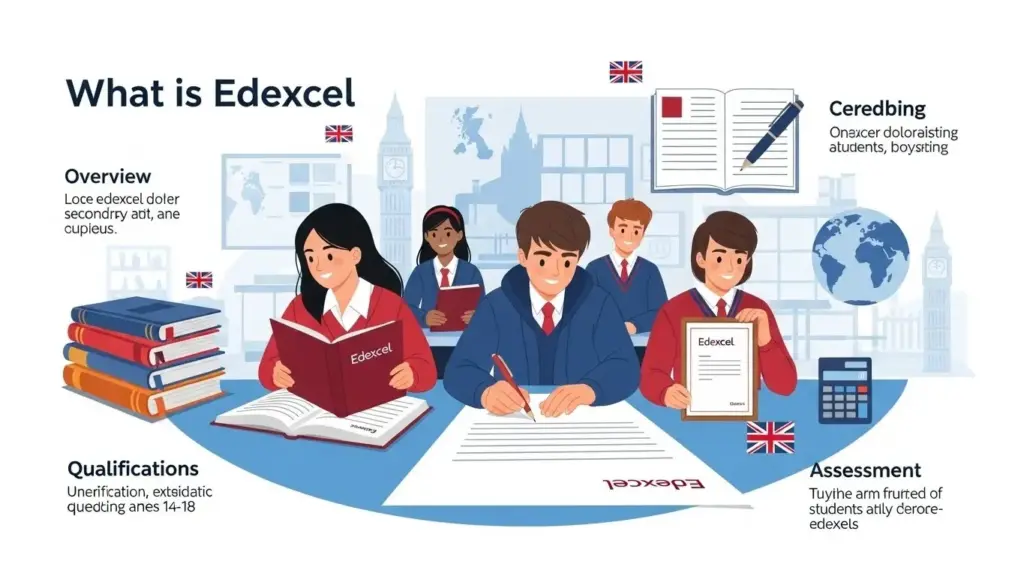
Like Cambridge, Edexcel offers internationally recognized qualifications such as International GCSEs (IGCSEs) and International A Levels (IALs), which are accepted by leading universities and employers around the globe. However, Edexcel is often seen as more flexible and student-friendly compared to Cambridge, thanks to its modular exam system and greater inclusion of coursework or practical assessments in certain subjects.
One of Edexcel’s standout features is that students can often take exams in modules (units) spread out over the course of their studies, rather than only at the end. This allows learners to focus on smaller portions of the syllabus at a time and retake specific modules if needed to improve their grades. This modular structure makes Edexcel particularly appealing to students who prefer continuous assessment over one big final exam.
Key Features of Edexcel:
- Global Recognition: Widely accepted by universities in the UK, USA, Canada, Europe, and beyond.
- Flexible Assessments: Offers both modular and linear exam structures, depending on the subject and region.
- Wide Range of Subjects: Over 40 IGCSEs and over 20 A Levels, including modern and vocational options.
- Student-Friendly: Modular exams allow retakes and gradual progression.
- Balanced Approach: Combines written exams with coursework or practicals in some subjects.
Best suited for students who:
- Prefer straightforward questions and clear exam criteria.
- I want a balance between theory and practical application.
- They are preparing for UK-based universities, though global recognition is equally strong.
Edexcel is well-suited for students who prefer a more flexible and less exam-heavy approach, making it easier to manage learning and assessments while still maintaining strong international recognition.
Key Differences Between Cambridge and Edexcel
Although both Cambridge (CAIE) and Edexcel (Pearson) offer internationally recognized qualifications, there are some important differences in how they structure learning, assessments, and recognition. Understanding these distinctions can help students and parents choose the exam board that best suits their learning style and future goals.
1. Assessment Style
The way exams are structured is one of the biggest differences between Cambridge and Edexcel.
- Cambridge (CAIE): Cambridge follows a linear assessment system, meaning students usually sit for their exams at the end of the course. This approach requires consistent study throughout the year and strong preparation for final exams. Coursework or practical assessments are limited to certain subjects (like sciences or languages), but overall, Cambridge is known for being exam-heavy. This style is often considered more rigorous and encourages students to develop long-term learning and exam endurance.
- Edexcel (Pearson): Edexcel is more flexible, offering both modular and linear options. In the modular system, the syllabus is broken into smaller units, and students can take exams in stages rather than all at once. They also have the option to retake modules to improve their grades, making it more student-friendly. Some subjects also include coursework or practical elements, which spreads the weight of assessment and reduces pressure on final exams.
2. Academic Approach
The teaching and learning philosophy behind each exam board also sets them apart.
- Cambridge (CAIE): Cambridge is widely known for its traditional and academically rigorous approach. Its syllabuses are designed to challenge students to think critically, analyze deeply, and build strong subject knowledge. The focus is on developing skills such as problem-solving, logical reasoning, and independent research. Because of this, Cambridge is often seen as better preparation for competitive universities where intensive final exams and analytical skills are crucial. However, this rigor can feel demanding for students who prefer step-by-step learning.
- Edexcel (Pearson): Edexcel, on the other hand, is often described as more student-friendly and flexible. Its structure encourages progressive learning, where students can tackle smaller parts of the syllabus over time (in modular formats). The inclusion of coursework or practical assessments in some subjects also provides alternative ways for students to demonstrate their skills beyond written exams. This makes Edexcel suitable for learners who benefit from continuous assessment and less exam pressure.
3. Grading System
The way student performance is graded also differs between the two boards, especially at the IGCSE level.
- Cambridge (CAIE): Cambridge uses the traditional A–G grading scale* for its IGCSEs. At A Level, grades are awarded from A to E*, with A being the highest* and E the minimum passing grade. This system is straightforward and widely recognized, but some argue that it offers fewer levels of distinction compared to the newer numerical scale.
- Edexcel (Pearson): Edexcel offers schools a choice at IGCSE: either the A–G system* (like Cambridge) or the more modern 9–1 grading system, where 9 is the highest grade and 1 the lowest pass. This numerical scale was introduced in the UK to provide more differentiation among top students, with a grade 9 being higher than a Cambridge-style A*. At A Level, Edexcel follows the same A–E scale* as Cambridge.
4. Global Recognition
Both Cambridge and Edexcel qualifications enjoy strong worldwide recognition, but there are subtle differences in how they are perceived.
- Cambridge (CAIE): Being a part of the University of Cambridge, CAIE carries a long-established reputation for academic excellence. Cambridge IGCSEs and A Levels are widely accepted by universities across the UK, USA, Canada, Australia, Europe, and Asia. Because of its traditional and rigorous approach, Cambridge is sometimes viewed as the “gold standard” of international qualifications, especially for students aiming for highly competitive universities.
- Edexcel (Pearson): Edexcel qualifications are also globally recognized and accepted by top universities around the world. Its modular system and vocational links make it especially popular in schools that want more flexible learning options. Universities generally view Edexcel International GCSEs and A Levels as equivalent to Cambridge, but some parents and students perceive Cambridge as slightly more prestigious due to its heritage.
5. Subject Range
The number and variety of subjects offered by each exam board can significantly influence a student’s choice, especially if they are interested in less common or specialized fields.
- Cambridge (CAIE): Cambridge provides one of the widest selections of subjects among international exam boards. Students can choose from 70+ IGCSE subjects and more than 55 A Level subjects, covering traditional academic areas as well as niche subjects like Global Perspectives, Environmental Management, and Travel & Tourism. This breadth allows students to tailor their studies more closely to their interests and future career paths.
- Edexcel (Pearson): Edexcel offers a slightly narrower range compared to Cambridge, with around 40 IGCSEs and 20+ International A Levels. While it may have fewer subjects overall, it is known for offering modern and vocational options alongside traditional ones. For example, Edexcel includes subjects like Business Studies, ICT, and Applied Science, which appeal to students looking for a more practical or career-focused path.
6. Exam Sessions
The timing and frequency of exam sessions is another factor that sets Cambridge and Edexcel apart, especially for students who want flexibility in when they sit for their exams.
- Cambridge (CAIE): Cambridge offers two main exam sessions each year:
- May/June (results released in August)
- October/November (results released in January)
Some regions may also have a March session, but this is limited to specific countries like India. With fewer sessions, Cambridge students generally have less flexibility in exam scheduling and retakes.
- Edexcel (Pearson): Edexcel provides more exam windows, making it more flexible for students. Most regions offer three sessions per year:
- January
- May/June
- October/November
This allows students to spread out their exams, retake units sooner if needed, and manage their workload more efficiently.
How to Choose the Right Exam Board?
Deciding between Cambridge (CAIE) and Edexcel (Pearson) isn’t just about which board is more popular or prestigious, it’s about finding the system that best matches a student’s learning style, strengths, and future goals. Here are some key factors to consider:
1. Learning Style
- If you are comfortable with final exams and like building deep subject knowledge over time, Cambridge may be the right choice.
- If you prefer smaller, modular assessments and want the flexibility of retakes, Edexcel might suit you better.
2. Academic Strengths
- Strong, independent learners who can handle exam pressure often thrive in the Cambridge system.
- Students who learn better through continuous assessment and step-by-step progress may find Edexcel more manageable.
3. Subject Availability
- If you’re looking for a wide range of subjects, including unique ones like Global Perspectives or Environmental Management, Cambridge offers more options.
- If you’re interested in practical or vocational subjects alongside academics, Edexcel may be a better fit.
4. University Plans
- Both boards are recognized worldwide, but Cambridge carries a longer academic tradition, which some families prefer for competitive university applications.
- Edexcel qualifications are equally accepted, and the modular approach may help boost grades through retakes, which can also support university entry.
5. Flexibility
- Cambridge has fewer exam sessions, meaning retakes might require a longer wait.
- Edexcel offers three sessions per year, making it more flexible for students needing extra chances.
Tip: There is no single “better” exam board; both are excellent. The right choice depends on your personal learning style, academic strengths, subject interests, and career aspirations.
Your decision may also depend on which exam boards are available at your school. For instance, several O and A Level schools in Sharjah and O and A Level schools in Ajman offer both Cambridge and Edexcel options, while others specialize in just one.
Pros and Cons of Cambridge vs Edexcel
Both exam boards are excellent, but each comes with its own advantages and challenges. Below is a side-by-side comparison to help you decide:
Cambridge (CAIE)
Pros:
- Globally recognized with a strong academic reputation.
- Wide subject range (70+ IGCSEs and 55+ A Levels).
- Rigorous and challenging, it prepares students well for top universities.
- Emphasis on critical thinking, analysis, and deep subject knowledge.
- Prestigious association with the University of Cambridge.
Cons:
- Exam-heavy (linear system puts pressure on final exams).
- Limited coursework or modular options.
- Fewer exam sessions (mainly May/June and Oct/Nov).
- It can feel more demanding and stressful for students who prefer continuous assessment.
Edexcel
Pros:
- Flexible modular system with opportunities for retakes.
- More frequent exam sessions (Jan, May/June, Oct/Nov).
- Student-friendly approach with manageable unit-based assessments.
- Includes modern and vocational subjects (e.g., Business, ICT, Applied Science).
- Globally recognized and equally accepted by universities.
Cons:
- Smaller subject range compared to Cambridge.
- Sometimes perceived as “less rigorous” than Cambridge (though universities treat them equally).
- A modular system may lead some students to focus on passing units rather than building long-term knowledge.
Note:
- Choose Cambridge if you’re aiming for a challenging, exam-focused system with wide subject choice.
- Choose Edexcel if you prefer a flexible, modular approach with more exam sessions and retake options.
Conclusion
Deciding between Cambridge (CAIE) and Edexcel is a significant step in a student’s academic journey. Both exam boards are globally recognized, equally respected by universities, and designed to help learners develop essential knowledge and skills. The choice ultimately depends on a student’s learning style, future goals, and personal strengths.
Cambridge examinations often challenge students with analytical, essay-based questions, encouraging deeper critical thinking and independent learning. This makes it an excellent choice for students who aim to develop strong problem-solving and research skills, particularly useful for careers in medicine, law, engineering, and academia.
Edexcel, on the other hand, provides a structured, practical, and straightforward assessment approach. With a clear marking scheme and application-focused style, it is often more accessible for students who prefer a step-by-step method to learning and exams. Its format is especially helpful for those who want a balance between theoretical knowledge and practical application, which supports careers in business, technology, and applied sciences.
When making the choice, students and parents should also consider:
- University preferences (though both are widely accepted, certain regions may be more familiar with one board).
- School resources (some schools are better equipped to teach one board over the other).
- Personal adaptability (how comfortable the student feels with each assessment style).
In the end, success is less about the exam board and more about the effort, consistency, and passion for learning that a student brings. Whether you choose Cambridge or Edexcel, both pathways can lead to remarkable opportunities if you approach them with dedication and the right mindset.
Frequently Asked Questions (FAQs)
1. Which exam board is harder, Cambridge or Edexcel?
There is no universal answer, as both boards have their own challenges. Cambridge (CAIE) often emphasizes deeper understanding and critical thinking through longer essay-style answers, while Edexcel focuses more on structured assessments, clear marking schemes, and application-based questions. Students who prefer analytical writing may find Cambridge more suitable, while those who perform better with straightforward marking may prefer Edexcel.
2. Do universities prefer Cambridge or Edexcel qualifications?
Most universities worldwide, including those in the UK, USA, Canada, and Australia, accept both Cambridge and Edexcel equally. What matters more is your overall grades, chosen subjects, and how well they align with the program you want to study. Cambridge may be slightly more recognized in certain regions (like Asia and Africa) due to its long history, but in the UK and internationally, both carry the same weight.
3. Are Cambridge and Edexcel syllabi the same?
Not exactly. While both boards cover the core areas of each subject, the structure, depth, and focus may differ. Cambridge usually has a broader international focus, with examples from around the world, while Edexcel often tailors its content to the UK curriculum. This can make the student experience quite different depending on which board is chosen.
4. Which exam board is better for science subjects?
Cambridge tends to have a more experimental and detailed approach, requiring strong practical and analytical skills. Edexcel, on the other hand, often provides clearer marking guidance and more straightforward practical assessments. Students aiming for careers in medicine, engineering, or research may appreciate the depth of Cambridge sciences, while those looking for a balanced approach may prefer Edexcel.
5. Which exam board is better for humanities subjects?
Cambridge generally demands more critical thinking, essay-writing, and analysis, which is excellent preparation for university-level study in fields like law, politics, or literature. Edexcel often focuses on clarity and structure, which may suit students who prefer a more straightforward approach to answering humanities questions.
6. Do Cambridge and Edexcel offer the same grading system?
Both boards follow the A*–E grading system at A Levels and the 9–1 or A*–G system for IGCSE/GCSE, depending on the region. However, grade boundaries and assessment weightings can differ slightly. Cambridge may have lower grade boundaries in some subjects due to tougher papers, while Edexcel boundaries tend to be more consistent.
7. Are Cambridge or Edexcel exams more expensive?
Exam fees can vary by country, subject, and school. In some regions, Cambridge exams may be slightly more expensive due to their global administrative structure. However, the difference is usually not dramatic, and affordability depends more on your school or exam center.
8. Which exam board is easier for self-study students?
Many students find Edexcel more manageable for private candidates because of its structured assessment style, clear resources, and straightforward question formats. Cambridge is also popular among self-study students but may require additional preparation due to its emphasis on critical thinking and essay-based responses.
9. Can students switch from Cambridge to Edexcel or vice versa?
Yes, but switching boards can be challenging because the syllabi and assessment styles differ. For example, a Cambridge student moving to Edexcel may find the structure more exam-oriented, while an Edexcel student switching to Cambridge might need to adjust to longer essay-style answers. It’s best to switch at natural transition points (like from O Levels/IGCSE to A Levels).
10. How do I decide which exam board is right for me?
Your choice should depend on:
- Learning Style: Do you prefer structured questions (Edexcel) or analytical, essay-based responses (Cambridge)?
- Future Plans: If applying to universities, both are equally accepted, but check if your target institutions have preferences.
- School Resources: Some schools specialize in one board and provide better support for it.
- Personal Strengths: If you excel in critical thinking, Cambridge might suit you better. If you prefer straightforward assessments, Edexcel could be the right fit.


0 Comments