


Level 3 is a level in the UK Education system. When it comes to pre-university qualifications, students often face a choice between Level 3 qualifications (such as BTEC, Cambridge Technicals, or Applied General qualifications) and the traditional A Levels. Both pathways are designed to prepare students for higher education or professional careers, but they differ in structure, focus, and assessment methods.
Choosing the right qualification can have a significant impact on your future academic and career options. Level 3 courses often emphasize practical, coursework-based learning and are ideal for students who prefer hands-on experience, while A Levels focus on academic, exam-based study, building strong theoretical knowledge in specific subjects.
Confused about Level 3 vs A Levels? This simple guide compares benefits, difficulty, and outcomes to help you decide fast.
In this article, we’ll explore the key differences, benefits, and considerations between Level 3 qualifications and A Levels to help students make an informed decision for their education and career journey.
What Are Level 3 Qualifications?
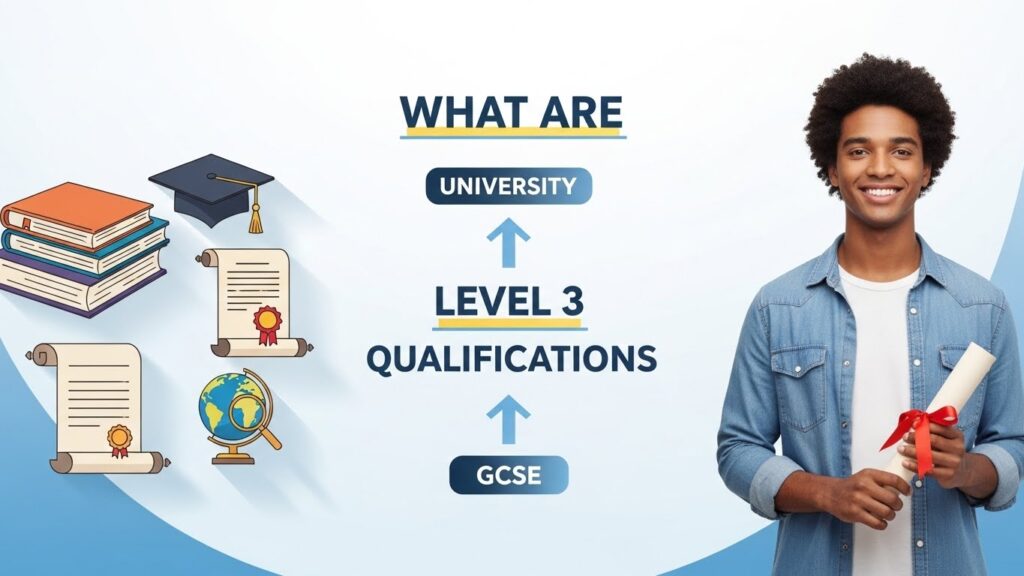
Level 3 qualifications are pre-university courses that prepare students for higher education, vocational training, or employment. They are equivalent to A Levels in terms of academic level but often focus more on practical skills, applied learning, and real-world experience.
Key Features of Level 3 Qualifications:
- Applied Learning: Emphasize hands-on projects, case studies, and practical assessments rather than solely exams.
- Flexible Assessment: Include coursework, presentations, and sometimes exams, allowing students to demonstrate their skills in multiple ways.
- Vocational Focus: Often designed to align with specific industries, such as business, IT, engineering, or health and social care.
- Pathways to Higher Education: Recognized by many universities, Level 3 qualifications can lead to undergraduate programs, though some competitive courses may prefer traditional A Levels.
Popular Examples of Level 3 Qualifications:
- BTEC Nationals: Vocational courses in subjects like business, engineering, or health sciences.
- Cambridge Technicals: Applied learning courses in IT, business, and creative media.
- Applied General Qualifications: Broad courses combining practical and academic learning.
Level 3 qualifications are ideal for students who prefer learning by doing and want a more flexible, career-oriented approach to pre-university education.
What Are A Levels?

A Levels, or Advanced Level qualifications, are traditional academic courses studied over two years (typically in Years 12 and 13) and are widely recognized as a pathway to university. They focus on in-depth theoretical knowledge and prepare students for higher education, particularly in academic or research-oriented fields.
Key Features of A Levels:
- Exam-Based Assessment: Most of the final grade comes from end-of-course examinations, with minimal coursework in some subjects.
- Specialization: Students usually select 3–4 subjects to study in depth, allowing them to specialize in areas of interest or strength.
- Academic Focus: Designed to develop analytical thinking, problem-solving, and critical reasoning skills.
- University Recognition: A Levels are highly respected by universities worldwide and are often required for competitive undergraduate courses.
Popular A Level Subjects:
- Sciences: Physics, Chemistry, Biology
- Mathematics: Pure Mathematics, Further Mathematics, Statistics
- Humanities: History, Geography, Economics
- Languages: English, French, Spanish
- Creative Subjects: Art, Music, Drama
A Levels are ideal for students who enjoy academic study, exams, and theoretical learning, and who aim for higher education, particularly at competitive universities.
Key Differences Between Level 3 and A Levels
Understanding the differences between Level 3 qualifications and A Levels is essential for students deciding which pathway best suits their learning style, career goals, and higher education plans. Here’s a clear comparison:
| Features | Level 3 Qualifications | A Levels |
| Focus | Practical, applied learning with real-world projects | Academic, theoretical learning in chosen subjects |
| Assessment | Mostly coursework, projects, and sometimes exams | Mostly exam-based, with some subjects including minimal coursework |
| Learning Style | Hands-on, skills-based, suitable for practical learner | Conceptual and analytical, suitable for academic learners |
| Subjects Offered | Vocational or career-focused subjects (e.g., IT, business, health & social care) | Wide range of academic subjects (e.g., sciences, humanities, mathematics) |
| University Recognition | Accepted by many universities, especially for vocational or applied courses; may be less preferred for highly competitive programs | Universally recognized by universities worldwide; often required for competitive academic courses |
| Duration | Typically 1–2 years, depending on the course and provider | Usually 2 years (AS and A2 levels) |
| Skills Developed | Practical skills, problem-solving, teamwork, and project management | Analytical thinking, research skills, critical reasoning, and theoretical knowledge |
| Career Orientation | Directly linked to specific industries and careers | Prepares primarily for higher education, though transferable to various careers |
| Assessment Stress | Lower exam pressure due to coursework-heavy approach | Higher exam pressure due to major reliance on final exams |
Level 3 qualifications are ideal for students who prefer practical learning, flexibility, and a direct connection to careers.
A Levels are best suited for students who excel in academic study, enjoy theoretical subjects, and aim for competitive university programs.
Grading System: Level 3 vs A Levels
Understanding the grading systems of Level 3 qualifications and A Levels is important, as it affects university applications and overall academic planning. Here’s a breakdown of how each qualification is graded:
Level 3 Qualifications Grading
Level 3 courses, such as BTEC Nationals or Cambridge Technicals, use a distinction-based grading system that reflects practical performance, coursework, and assessments.
Typical Grades:
- Distinction (D)*: Excellent performance, highest standard
- Merit (M): Good performance, above average
- Pass (P): Satisfactory performance, meets course requirements
- Fail (F): Does not meet course requirements
Key Points:
- Grading often considers both coursework and exams, depending on the subject.
- Level 3 grades are sometimes converted to UCAS points for university applications.
A Levels Grading
A Levels follow a letter-based grading system primarily based on exam performance, with some subjects including coursework.
Grades:
- A (Highest achievement)*
- A
- B
- C
- D
- E (Minimum passing grade)
- U (Ungraded/Fail)
Key Points:
- Grades are based on overall exam scores, sometimes combined with coursework or practical assessments.
- A Level grades are widely recognized by universities and directly influence admission decisions.
This difference also reflects the learning style and assessment approach: coursework-heavy for Level 3 vs exam-heavy for A Levels.
Cost and Accessibility:
When choosing between Level 3 qualifications and A Levels, it’s important to consider both cost and accessibility, as these factors can influence your educational path and future opportunities.
Cost of Level 3 Qualifications
- In Schools and Colleges: For students under 19 in the UK, Level 3 courses (like BTEC Nationals) are typically free of charge, provided they are studied full-time at a government-funded institution.
- Private Study: If taken privately or through online platforms, costs can range from £1,000 to £3,000 per year, depending on the course provider and subject.
- Materials and Coursework: Since Level 3 qualifications often involve practical projects, students may need to pay for supplies, fieldwork, or coursework materials.
Cost of A Levels
- In Schools and Sixth Forms: Like Level 3 courses, A Levels are free for students under 19 studying in state-funded schools or colleges.
- Private Candidates: Those studying independently or retaking exams can expect to pay around £150–£300 per subject, plus exam entry fees (typically £50–£150 per paper).
- Additional Costs: A Level students may need to purchase textbooks, lab equipment, or study resources, though these costs are usually minimal compared to private tuition fees.
Accessibility
- Level 3 Qualifications: These are widely accessible in colleges, vocational centers, and some schools, offering flexible entry requirements and alternative routes for students who prefer practical learning or didn’t achieve high GCSE results.
- A Levels: Usually offered in sixth form colleges or schools, A Levels often require strong GCSE results (especially in relevant subjects) and are geared toward students aiming for university-level study.
Level 3: More accessible for practical learners; may involve extra costs for coursework materials.
A Levels: Academic-focused and widely recognized; mostly free in public institutions but may cost more for private study.
Pros and Cons of Level 3 Qualifications
Before deciding whether a Level 3 qualification is right for you, it’s essential to understand both its advantages and limitations. These qualifications are designed to provide a mix of academic knowledge and practical skills, but their value depends on your career goals and preferred learning style.
Pros of Level 3 Qualifications
- Practical and Career-Focused Learning: Level 3 courses (like BTEC Nationals) focus on hands-on experience, making them ideal for students who prefer practical learning over theory-based study.
- Flexible Assessment Methods: Unlike A Levels, which rely heavily on final exams, Level 3 qualifications include coursework, projects, and continuous assessments, reducing exam pressure.
- Pathway to University and Employment: Many universities in the UK and abroad accept Level 3 qualifications for admission, especially in vocational or applied subjects. They also prepare students for direct entry into the workforce.
- Skill Development: Students gain valuable technical, teamwork, and problem-solving skills, which are highly sought after by employers in various industries.
- Accessibility and Support: Level 3 courses often have broader entry requirements than A Levels, allowing more students to pursue higher education or professional training.
Cons of Level 3 Qualifications
- Limited Academic Depth: While Level 3 qualifications provide strong practical skills, they may lack the deep academic rigor found in A Levels, which some universities prefer for theory-heavy degrees.
- Recognition Varies by Institution: Although widely accepted in the UK, some top-tier universities (like Oxford or Cambridge) may prefer traditional A Levels for certain subjects.
- Workload and Coursework Pressure: Since assessment is ongoing, students must stay consistent throughout the course. Deadlines and continuous assignments can feel overwhelming.
- Fewer Subject Options: Level 3 courses often focus on specific vocational fields, such as business, IT, or health sciences, meaning less flexibility compared to A Levels’ broad academic subjects.
- Transition to University Can Be Challenging: Students used to practical coursework may initially struggle with exam-based learning when they move on to degree programs.
Level 3 qualifications are excellent for students who prefer practical, skill-based learning and want flexibility in assessment. However, those aiming for competitive universities or theory-heavy degrees may benefit more from A Levels.
Pros and Cons of A Levels Program
A Levels are one of the most recognized academic qualifications worldwide, especially for students planning to pursue university education. However, like any educational path, they come with their own set of advantages and disadvantages. Understanding both will help you decide whether A Levels align with your academic goals and learning style.
Pros of A Levels
- Highly Recognized by Universities Worldwide: A Levels are accepted by top universities across the UK and globally, making them an ideal choice for students aiming for higher education in competitive fields like medicine, engineering, or law.
- Strong Academic Foundation: A Levels offer in-depth study of selected subjects, helping students develop analytical thinking, research, and essay-writing skills that are essential for university-level study.
- Wide Range of Subject Choices: Students can choose from a broad variety of subjects, from sciences and mathematics to arts and humanities, allowing flexibility based on career aspirations.
- Pathway to Prestigious Careers: A Levels are often the preferred route for professions such as doctors, lawyers, engineers, and scientists, as they emphasize theoretical and critical understanding.
- Clear Progression to Higher Education: The A Level curriculum directly aligns with university requirements, making the transition to degree-level education smooth and structured.
Cons of A Levels
- Exam-Heavy Assessment: Levels are primarily exam-based, which can be stressful for students who don’t perform well under timed conditions. There’s limited opportunity for coursework to balance the grade.
- Limited Practical Learning: The A Level system focuses more on theoretical knowledge than practical skills, which may not suit students who prefer hands-on or vocational learning.
- High Academic Pressure: The two-year A Level course is intense and demanding, often requiring long study hours and strong time management skills to achieve top grades.
- Fewer Vocational Pathways: Unlike Level 3 qualifications, A Levels don’t directly prepare students for specific jobs or industries, which may limit immediate employment opportunities after completion.
- Competitive University Entry: Students often need high grades (A or A)* to enter top-tier universities, making A Levels a high-stakes qualification.
A Levels are perfect for academically focused students aiming for university and professional careers, offering strong subject knowledge and global recognition. However, for learners who prefer practical, coursework-based education, Level 3 qualifications may be a better fit.
Recognition and Future Opportunities
When choosing between Level 3 qualifications and A Levels, understanding their recognition and long-term opportunities is crucial. Both pathways can open doors to higher education, professional training, or employment, but the type of opportunities they lead to can differ based on your goals.
Recognition
Level 3 Qualifications:
- Widely recognized by UK universities, especially for vocational and applied degree programs.
- Accepted by many employers and apprenticeship providers, as they focus on real-world skills and industry-relevant experience.
- However, recognition can vary internationally, some top or research-intensive universities may prefer A Levels for highly academic subjects.
A Levels:
- Considered the gold standard of pre-university education and recognized globally by universities and employers.
- Accepted by all UK universities, including the Russell Group (Oxford, Cambridge, etc.), and by institutions in the US, Canada, Australia, and Europe.
- Highly valued for their academic depth and rigor, making them ideal for students aiming for competitive degrees.
Future Opportunities
Level 3 Qualifications:
- Provide direct routes into employment, apprenticeships, or vocational degree programs such as business, IT, healthcare, or engineering.
- Ideal for students who want to enter the workforce early with strong practical and technical skills.
- Graduates often continue into foundation degrees, HNDs (Higher National Diplomas), or specialized vocational training.
A Levels:
- Serve as a gateway to university education, leading to degrees in law, medicine, economics, sciences, arts, and more.
- Offer flexibility, A Level students can easily shift between disciplines before university.
- Preferred for academic and professional careers, including fields like finance, research, law, and engineering.
- Level 3 Qualifications: Best for students aiming for practical careers or vocational degrees with hands-on experience.
- A Levels: Best for students targeting academic excellence and global university admissions.
Level 3 opens doors to skill-based pathways, while A Levels unlock academic and international opportunities.
Which One Should You Choose Level 3 vs A Levels?
Deciding between Level 3 qualifications and A Levels depends on your learning style, career goals, and academic strengths. Both pathways can lead to success, the key is choosing the one that best matches your personal interests and future aspirations.
Choose Level 3 Qualifications If:
- You prefer practical learning: Level 3 courses focus on real-world skills and project-based assessments rather than written exams. If you learn better by doing, this is the right choice for you.
- You’re career-oriented: These qualifications prepare you directly for specific industries such as business, IT, health sciences, or engineering, perfect if you want to enter the workforce sooner.
- You find exams stressful: Since Level 3 qualifications rely heavily on coursework and continuous assessment, they’re great for students who prefer steady progress over high-pressure final exams.
- You want flexible study options: Level 3 courses are often available in colleges with varying study modes (full-time or part-time), making them accessible for a wide range of learners.
Choose A Levels If:
- You enjoy academic and theoretical study: A Levels are designed for students who like analyzing concepts, writing essays, and mastering theoretical subjects such as science, mathematics, or literature.
- You plan to go to university: A Levels are the most direct route to higher education, especially for competitive fields like law, medicine, or engineering at top universities.
- You want subject flexibility: With A Levels, you can choose from a wide variety of subjects, allowing you to explore different fields before specializing at university.
- You aim for global recognition: A Levels are recognized by universities and employers around the world, making them ideal if you plan to study or work internationally.
If you’re a hands-on learner seeking job-ready skills and vocational growth, Level 3 qualifications could be your best path. But if you’re an academically focused student aiming for university and a professional career, A Levels are the stronger option.
Ultimately, the best choice depends on where you see yourself in the next few years, both routes can lead to success, as long as they align with your goals and learning style.
Conclusion
Choosing between Level 3 qualifications and A Levels is one of the most important decisions in your academic journey. Both pathways offer valuable opportunities, the right choice depends on your career goals, learning style, and future plans.
If you’re someone who enjoys hands-on learning, practical projects, and real-world applications, Level 3 qualifications can give you the skills and experience needed to enter the workforce or pursue vocational degrees. They provide flexibility and focus on consistent performance rather than exam pressure.
On the other hand, if you’re academically driven and aiming for university education or professional careers like medicine, law, or engineering, A Levels are the ideal route. They’re globally recognized and open doors to top universities and diverse career paths.
Ultimately, there’s no single “better” option, both Level 3 and A Levels can lead to success if they align with your strengths and ambitions. The key is to choose the path that matches your passion, study preferences, and long-term goals.
Whichever path you choose, stay focused, work hard, and take advantage of every opportunity to build the foundation for a bright future.
Frequently Asked Questions (FAQs)
1. Are Level 3 qualifications equivalent to A Levels?
Yes. Level 3 qualifications (like BTEC Nationals or Cambridge Technicals) are considered equivalent to A Levels in terms of academic level. However, they differ in focus, Level 3 is more practical and coursework-based, while A Levels are academic and exam-focused.
2. Can I get into university with a Level 3 qualification?
Absolutely. Many UK universities accept Level 3 qualifications for admission, particularly for vocational or applied degree programs. However, some highly competitive universities (like Oxford or Cambridge) may prefer traditional A Levels.
3. Which is harder: Level 3 or A Levels?
It depends on your learning style. A Levels are generally more theory-heavy and exam-based, which some students find harder. Level 3 courses involve continuous coursework, which requires consistent effort but may be easier for practical learners.
4. Can I study both Level 3 and A Levels together?
Yes, some colleges allow students to combine Level 3 and A Levels, such as taking two A Levels and one BTEC subject. This hybrid approach can balance theory with practical experience.
5. How long do Level 3 qualifications and A Levels take to complete?
Both usually take two years to complete when studied full-time. Some accelerated or part-time options are available depending on the institution.
6. Which qualification is better for getting a job after school?
Level 3 qualifications often lead directly to employment or apprenticeships, as they focus on industry-specific skills. A Levels, on the other hand, are better suited for students planning to attend university first.
7. Are Level 3 qualifications recognized internationally?
Level 3 qualifications are mostly recognized in the UK and Commonwealth countries, but A Levels have broader global recognition, especially in the US, Europe, and Asia.
8. What subjects are available in Level 3 qualifications?
Level 3 offers a range of vocational subjects, including Business, Health & Social Care, IT, Engineering, and Media Studies, designed to prepare students for specific industries.
9. What grades do I need to take A Levels or Level 3 courses?
Most colleges require at least 5 GCSEs (grades 9–4), including English and Maths, to enter either pathway. Some Level 3 courses may have lower entry requirements than A Levels.
10. Which qualification gives more career flexibility?
A Levels generally offer greater flexibility, as they are widely accepted for a variety of university degrees and careers. Level 3 qualifications are more specialized, ideal for students who already have a clear career path in mind.

0 Comments